A margin call is the final whistle for a trader. If your margin can no longer cover your losses, you have a choice: survive or go under.
When you trade derivatives, you deposit margin to cover your losses. If your losses grow, the required cover grows too. It works like insurance. Your broker, if it is not a scam, will ask you to top up your margin, or else it will close the position. This request for additional capital is called a margin call.
Margin is at the heart of trading. Margin trading gives you access to leverage that boosts your capital.
The definition of margin trading is trading with leverage. It lets you take positions far beyond what you could finance yourself.
Margin is a technical trading term. To take a position on lots worth 100,000 dollars, you put up margin (or cover) of 0.2% of the price. That is your entry ticket to forex.
Here is how it works.
Definitions
Leverage: leverage is a metaphor. You do not have enough capital to enter the markets, so you expand your capital through leverage. This multiplies the power of your capital tenfold or more, which is the principle of a lever: multiplying force. Leverage can take different values: ×10, ×50, ×100. The maximum is generally 500.
Leverage can increase gains, but also losses. Forex: forex refers to the currency market. The euro is traded against the dollar, the yen against the pound sterling. This market determines the exchange rates of sovereign currencies. In forex trading, currencies are traded in lots of 100,000 units. One EURUSD lot contains 100,000 euros. This kind of market is reserved for banks.
Leverage gives you access to it. CFD: contract for difference. This is the name of the contract that lets you speculate on forex. Margin rates apply to these contracts. In detail, what counts is the difference between the asset’s value when the contract is opened and when it is closed. If the difference is positive, you make money; if it is negative, you lose money.
Broker: a broker is an intermediary such as Vantage FX. Depending on the broker you choose, leverage and fees will differ. The broker plays an important role in your investments, as it lends you the money for your margin trades.
Margin: the amount required to open a leveraged position. To open three positions of 100,000 euros with leverage of 500, you need 600 euros of margin (300,000 / 500). Since margin is a ratio, some people talk about the margin rate. The definition stays the same.
Margin, or cover, is how investing on the markets works. On forex, the lot size is 100,000 euros. Very few investors can afford to stake that much. As a reminder: only invest what you are prepared to lose.
Do you have 100,000 euros to lose? No. Don’t worry, neither do we!
If the position costs 100,000 euros and leverage is 500, your margin will be 0.2%, or 200 euros. We would say: “The margin required to open this position is 200 euros.” It is important to understand how margin is calculated.
How to Calculate Margin in Trading
Here is the formula for calculating margin in forex:
Position price × margin percentage
A position of 2 EURUSD lots: one lot is worth 100,000 EUR, so the position is worth 200,000 euros.
In this example, the broker requires margin of 0.2%.
The margin will therefore be 200,000 × 0.2% = 400 euros.
A position of 2 EURUSD lots: one lot is worth 100,000 EUR, so the position is worth 200,000 euros.
In this example, the broker requires margin of 1%.
The margin will therefore be 200,000 × 1% = 2,000 euros.
Margin serves as a guarantee for the broker. If you make a loss, margin ensures you have the means to pay. But prices can move very quickly.
Required Amount (Margin) per Standard Lot ($100,000)
Required Amount (Margin) per Mini Lot ($10,000)
Required Amount (Margin) per Micro Lot ($1,000)
Required Amount (Margin) per Nano Lot ($100)
1:20
5%
$5,000
$500
$50
$5
1:25
4%
$4,000
$400
$40
$4
1:50
2%
$2,000
$200
$20
$2
1:100
1%
$1,000
$100
$10
$1
1:200
0.5%
$500
$50
$5
$0.50
1:400
0.25%
$250
$25
$2.50
$0.25
1:500
0.2%
$200
$20
$2
$0.20
1:1,000
0.1%
$100
$10
$1
$0.10
1:2,000
0.05%
$50
$5
$0.50
$0.05
1:3,000
0.033%
$33
$3.30
$0.33
$0.033
Calculating Required Margin
Calculating margin correctly lets traders determine the leverage they will need to take a position. It also helps them estimate their potential losses or gains on a position.
Available funds or free margin = account balance − balance used +/− realised losses or gains.
Margin or Leverage?
Beginners often ask: “What is leverage in trading?” It is the same thing as margin.
The broker has the necessary funds, and you can team up with it to trade a 100,000-euro lot. You are entitled to buy CFD margin on its investment, contributing 0.2% of the total value.
Margin is a division.
Leverage is the same! You are “missing” 99,800 euros to trade a forex lot with your meagre 200 euros. So you need to make up the difference. The broker then multiplies your 200 euros by 500 = ×500 leverage.
Leverage is a multiplication. But it amounts to the same thing:
You will have noticed that
200 × 500 gives 100,000, and that
0.2% × 100,000 gives 200.
And multiplying by 0.2% is the same as dividing by 500.
200 × 500 = 100,000 ×500 leverage on your capital of 200 euros
100,000 / 500 = 200 0.2% margin to pay on the 100,000-euro lot
It is just a matter of perspective. Traders use the term leverage more often. But you now know that both refer to the same thing.
In margin trading jargon, it is essential to understand certain terms that come up again and again. You cannot discuss margin trading without mentioning terms such as initial margin and maintenance margin. The most important include:
Margin and Leverage
Margin is a portion of the trader’s capital that the broker holds as collateral to cover the risk the trader takes. It is returned to the trader when the position is closed. Gains or losses are then credited or debited to the trader’s account when the position closes. We can therefore distinguish:
Initial margin: the amount the trader must have in the account to open a position, also called deposit margin. If prices do not move in the direction the trader expected, it will no longer be enough to keep the position open.
Maintenance margin: the margin that keeps the position open when prices do not move as expected. When the amount in the account is no longer enough to keep the position open, the broker issues a margin call.
Available funds or free margin: also called available margin, this is the margin the trader can still invest. It is the amount of money available in the account with which the trader can open new positions. It is simply the portion of capital not yet allocated.
A margin call is therefore the amount required by the broker to continue covering a position.
Leverage, for its part, is borrowed money used to make up the required margin. In the markets, the US Federal Reserve Board regulates the treatment of leverage and margin in order to maintain the stability of the monetary and financial system.
What Is a Pip in Forex?
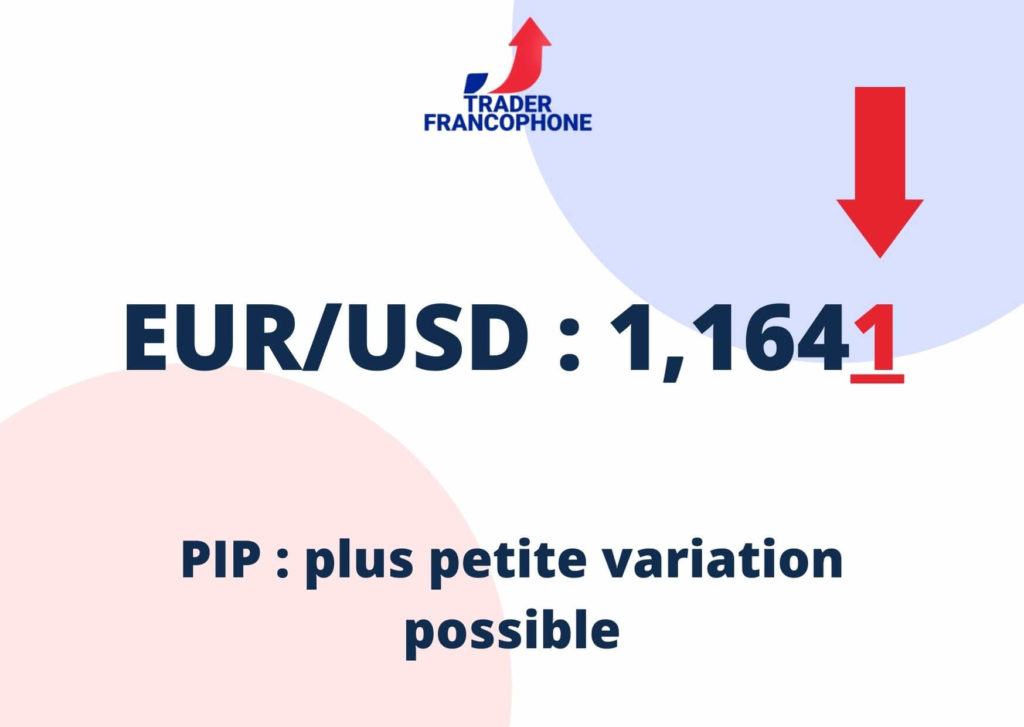
A pip (percentage in point) is the smallest possible change in your position. The value of a pip depends on several factors: the lot price and the value of the EURUSD pair.
Pip: the smallest possible change in an asset’s price.
You need to calculate the pip value so you can include it in your trading strategy.
When you put 1,000 euros into your account, you have 1,000 euros of available margin, also called free margin, for forex trading.
This margin is called available because it is not yet tied up. It can be used to open positions. It can also be used as maintenance margin.
How to Calculate Available Margin
You have 1,000 euros. You want to trade forex.
A position on a 100,000-euro lot costs 200 euros with ×500 leverage.
You need 200 euros of margin. You are exposed up to 200 euros. This money is tied up in a position.
You have 800 euros of available margin left. These 800 euros can still be invested.
The 200 euros of margin are tied up in the position to absorb any losses. This margin therefore acts as a guarantee.
Available margin equals the balance minus the margin used.
Balance: 1,000 euros
Margin: 200 euros
Available margin: 1,000 − 200 = 800 euros
Available margin, meanwhile, can be used to open other positions. Available margin is calculated automatically by your MetaTrader 4 and MetaTrader 5 platforms.
You will also find indicators such as your margin level. The margin level in trading shows the impact of your other positions on your portfolio.
MT4 and MT5 provide forex trading services. On the MT4 platform, available margin is shown as free margin.
Initial margin is the minimum amount of margin required to open a position. It is also called deposit margin. Imagine investing is a staircase: the smallest step you can take is one stair. You can climb the stairs two or three at a time, but never half a stair at a time.
Initial margin is the size of one stair for a given product. This amount must always be available in your account, either as cash or as winning positions. If you do not have the initial margin amount, you will not be able to open the position.
This size varies depending on the product’s value and the leverage (or margin ratio).
Calculating Initial Margin
When you open a position, you must have at least the initial margin amount in your account to secure your trade. product value / leverage Take the example of a 100,000-euro lot.
The highest leverage your broker can offer is 500.
Initial margin = 100,000 / 500
The initial margin for this position is 200 euros.
If your balance falls below 200 euros, you will not be able to open this position.
To get familiar with these new concepts, open a demo account. That way, you can test them in real market conditions.
So to open a position, you need initial margin that covers the required margin amount.
And while the position is open, the broker will check as prices fluctuate that you have enough maintenance margin.
Maintenance Margin
What is maintenance margin?
We have discussed initial margin. Maintenance margin is the equivalent of initial margin, but throughout the trade, from opening to closing. Initial margin only applies when the trade is opened.
The value of your position will fluctuate. If it loses value, you will have lost money. The rest of your account balance will then need to be enough to cover the maintenance margin.
If you want to keep your position open, you must have the maintenance margin amount in your account, either as positive CFD contracts, that is, winning trades you have not yet closed, or as cash.
If you are unable to cover your losses and the maintenance margin, the broker will liquidate your other positions, or even your entire account, to cover the losses: this is liquidation.
Liquidation and margin calls are a trader’s greatest dangers. You are sailing in troubled waters and your canoe is dangerously exposed. If you want to avoid a shipwreck, read our article on margin calls.
How to Calculate Maintenance Margin
You have 1,000 euros in your account.
If you have opened a 100,000-euro position with leverage of 100, you have 1,000 euros of margin (100 × 1,000 = 100,000).
If this position loses 0.5%, you will have lost 500 euros.
Your margin = 1,000 − 500 -> 500 euros.
But the position is worth 99,500 euros, so the required maintenance margin is 995 euros. You are 495 euros short.
If you only had 1,000 euros in your account, you are now in a margin call.
But if you have 495 euros in your account, you can keep this position open. This is the maintenance margin.
If your balance is below the maintenance margin, you will have to add money to your account or see the position closed: this is a margin call.
In forex trading, margin level is the ratio between your margin and your balance. It shows whether the money in your account is in the balance, where it can provide maintenance margin for a losing position, or whether it is already committed to other positions.
If your maintenance margin is above 100 (it is a percentage), you are safe, although you can still risk a margin call if you do not use a stop loss.
If your margin level is between 100 and 0, your exposure is dangerous. You need to reduce your exposure.
How to Increase Your Margin
Note that we are talking about trading margin here, not profit margin in the accounting sense. There are several ways to get more margin in trading:
Monitor Your Margin Level on MT4:
Your margin level helps you make sure you always have enough available margin to avoid a margin call. Margin level is calculated automatically, but you can find its formula in the section “What Is Margin Level?”.
Close Positions:
By closing positions, you lock in any unrealised gain. But above all, you recover the margin you had tied up. It is a bit like getting your deposit back after a rental. In addition, the position no longer carries volatility risk. So it is one less risk for your portfolio and possibly one less maintenance margin requirement. This is reflected in the margin level, which rises when you close a position.
Hold Winning Positions:
Even if they are not closed, winning positions are added to your balance. How? Unrealised gains, that is, the money you have made on top of your margin, are calculated in real time and added to your portfolio as the money you would make if you sold the positions.
Simply Add Money
If you have more money on your platform without placing it in positions, you can trade with peace of mind. The money you trade with in your account should represent 2% of your capital.
What Are the Benefits of Margin for a Trader?
Margin absorbs losses on the market.
When you place an order on one EURUSD lot, you only pay 200 euros of margin.
But a pip is worth 10 euros. A 100-point move represents 1,000 euros.
So with 200 euros, you can win or lose 1,000 euros.
Yet you only put up 200 euros of margin. You can therefore earn more than you invested.
You can lose more than you invested.
If you are down 1,000 euros on a 200-euro position, you will have to pay the difference, that is, top up by 800 euros.
If you buy a share at 100 euros, you cannot lose more than 100 euros. With margin trading, you can open a position with 200 euros but lose 1,000 euros. You can therefore lose more than you originally staked. You can end up in debt.
Margin absorbs your losses if the market moves against you, but you can see that 200 euros of margin cannot absorb the losses on a 100,000-euro lot. That is why you may need more margin.
Your account balance lets you absorb losses on your positions.
You Can Compare It to a Mortgage
You want to buy a house worth 100,000 euros.
But you only have 200 euros. The bank will lend you the remaining 99,800 euros.
In return, the house serves as collateral: if you can no longer make the monthly payments, you will have to sell the house back to the bank.
But the key point is that you get to enjoy the whole house for 0.2% of its price.
With a mortgage, you do not sell the house a few hours later to make a capital gain. In forex trading, leverage is used to buy assets with high value and high liquidity.
You cannot trade houses. But you can trade forex.
In a margin trade, the broker lends you 99,800 euros. Since you have no house to mortgage, the money you hold with the broker (balance + your winning trades) serves as collateral. And you only need to invest a fraction of the price as margin.
But the key point is that you now have access to a 100,000-euro position.
Your gains and losses will apply to the entire position, not just the 200 euros.
Margin also takes your winning positions into account, so you can cover your losses with your gains. This lets you put diversification strategies in place to protect yourself.
To Sum Up
You now know how forex trading works for professional and retail traders.
CFD contracts are worth 100,000 euros
A position may cost only 200 euros, yet it exposes you to the price moves of a 100,000-euro asset.
How margin works is only the first step of a discipline that goes hand in hand with trading: money management.
Trading and money management are like yin and yang. Trading helps you make money; money management keeps you from losing it.
Knowing everything about margin trading is crucial, as it helps you approach market operations with more confidence. It is important to know what it is and, above all, to understand the concepts surrounding margin trading. It is an investment technique very frequently used by successful traders.
What Is Margin in Trading?
Margin trading is a trading technique that involves buying financial assets using leverage. It is a way of trading with funds provided by third parties. This method is very common in forex. It lets traders amplify their results on the markets by giving them the ability to invest more capital than their accounts hold.
In margin trading jargon, it is essential to understand certain terms that come up again and again. You cannot discuss margin trading without mentioning, for example, initial margin and maintenance margin.
Some Key Concepts in Margin Trading
Margin is a portion of the trader’s capital that the broker holds as collateral to cover the risk the trader takes. It is returned to the trader when the position is closed. Gains or losses are then credited or debited to the trader’s account when the position closes. We can therefore distinguish:
Margin Trading: Initial Margin
This is the amount the trader must have in the account to open a position, also called deposit margin. If prices do not move in the direction the trader expected, it will no longer be enough to keep the position open.
Margin Trading: Maintenance Margin
This is the margin that keeps the position open when prices do not move as expected. When the amount in the account is no longer enough to keep the position open, the broker issues a margin call.
Margin Trading: Available Funds or Free Margin
Also called available margin, this is the margin the trader can still invest. It is the amount of money available in the account with which the trader can open new positions. It is simply the portion of capital not yet allocated.
Margin Trading: The Margin Call
This is the amount required by the broker to continue covering a position. Leverage, for its part, is borrowed money used to make up the required margin. In the markets, the US Federal Reserve Board regulates the treatment of leverage and margin in order to maintain the stability of the monetary and financial system.
How to Trade on Margin
To trade on margin, the investor must open a margin trading account with the provider. Unlike a standard trading account, it lets them trade assets worth more than the holdings in their account.
Once the account is open, the investor and the broker agree on the terms of the margin trading account. These terms generally cover initial margin, maintenance margin and minimum margin. They also cover the risks the provider takes on its positions.
Margin trading is a rather aggressive way of trading. It carries a higher level of risk for the trader, so a good grasp of its principles is essential. The rules and principles around this method are designed solely to help traders focus their objectives and define their potential gains and losses.
Margin Trading Example
Once you have opened your account, the broker can put up part of the capital needed to open a position. For example, if you want to buy €600 worth of Apple shares and your broker asks for 20%, you will pay €120. This is the deposit margin, or initial margin.
The capital in your account must then be able to keep the position open until your targets are reached. When you open the position, you set a stop loss level, which reflects the losses and risks you are willing to take. The stop loss value and the deposit margin make up the maintenance margin. This is what keeps your position open until it is closed.
If the money in your account is not enough to keep the position open, the broker will ask you to add funds. This is known as a margin call.
Margin Trading: Cross Margin vs Isolated Margin
Margin trading comes in several forms so that traders can choose how they want to take positions. However, all these variations are mainly intended to make decisions about the level of risk more flexible. We therefore have:
Cross-margin trading: a style of margin trading in which the trader has a single pool of funds. All the funds available in the account are used to cover the various positions. This aims to avoid account liquidation, so the broker does not need to issue margin calls.
Isolated-margin trading: a style of margin trading in which the trader allocates a specific amount to cover a position. If prices do not move as expected, losses are limited to the amount allocated to the position. However, it is possible to add margin manually when there is a margin call.
What Are the Risks of Margin Trading?
The risk of losing capital;
Positions being closed prematurely;
Irrational decisions after significant losses;
Repeated margin calls.
Margin Trading: Cryptocurrencies
Cryptocurrency is one of the main financial instruments traded on margin. Although margin trading already carries a high level of risk, the risk is even higher with crypto. The crypto market is very volatile, with greater risk. It is nevertheless possible to trade crypto on margin thanks to the facilities offered by some platforms.
Brokers offer the best conditions for margin trading, and these vary from one broker to another.
Given its profit potential, this trading method is very common with cryptocurrencies. It is therefore worth looking at how specialised crypto brokers approach margin trading. The most common in France are:
Binance: a broker with a major position in the crypto market. With its own token, Binance offers fairly easy margin trading.
KuCoin: like Binance, KuCoin offers fairly easy margin trading. Its trading interface is designed for users’ needs, whether beginners or professionals. Margin trading there works in four steps.
Open a margin trading account: this is separate from the standard trading account. You should read the risk disclosure on margin trading carefully before opening an account.
Once your account is open, transfer funds from your crypto account to your margin trading account. This limits the risk to the amount allocated to the account. You can transfer the cryptocurrency of your choice.
Next, you can borrow funds. The money transferred from your wallet to your account serves as collateral for the borrowed funds.
You can then start trading with the borrowed funds plus interest. Interest rates are updated every hour on platforms such as Binance.
When you make a profit, you repay the borrowed amount plus interest. If you make losses, they are covered by the capital in your account. If the capital can no longer cover your losses, the broker will ask you to add funds: this is the margin call.
Pros and Cons of Margin Trading
Margin trading is a rather special style of trading. It has many strengths, but also weaknesses. It is therefore not recommended for beginners, for various reasons, including risk exposure.
1. Advantages of Margin Trading
Margin trading has many advantages, including:
These trading accounts can generate very large profits, which is one of their main advantages.
They let traders diversify: with these accounts, they can open positions on several fronts of the market.
With margin trading, you can invest in large assets with little capital.
2. Disadvantages of Margin Trading
Just as it has advantages, margin trading has disadvantages you should consider before getting started. These include:
The main drawback lies in the scale of losses a margin trading account can generate. The more it can increase profits, the more it can increase losses if the market moves the other way. That is why it is not recommended for beginners. For professional traders, a solid grounding in risk management is advisable.
Conclusion: Is Margin Trading Advisable?
Although it can be very profitable, margin trading carries significant risks. Good risk management is therefore essential to succeed with it. It exists in several forms and can now be found in both the crypto and CFD markets. The best broker for this type of trading in France that we can recommend is AvaTrade. This broker offers a minimum deposit accessible to everyone, plus high leverage and a low margin call level.
Margin calls explained simply: why is it called a “call”? The name comes from financial tradition, back when the stock exchange was a building with great stone columns. In that building, information was passed on by word of mouth, and Paris Stock Exchange brokers literally called their clients to tell them their margin had been exceeded.
Today, all that remains of this tradition is the phone call. And in most cases, the call has been replaced by an email.
The margin call was popularised by the film Margin Call. In the film, it is the bank Lehman Brothers that faces one. And we know what happened next: in 2008, the subprime crisis caused the collapse of the century-old bank.
While it was a death sentence for the bank, the same was true for many traders.
What Is a Margin Call in Trading?
Informally, traders talk about it as if it were a place: the dead zone. You are “in” a margin call on a position.
A margin call occurs when the account’s exposure exceeds its balance. It is as if you had bet 10 houses, sure you would win.
But you lost. So you are in debt. You have two options: pay for the 10 houses and take your losses, or double down with 20 houses.
Forex Calculation Example:
You have 1,000 euros in your trading account. You open a forex position with leverage of 500.
Price of a forex position = 100,000 euros per position.
Required margin = 100,000 / 500 = 200 euros.
So you have 200 euros of margin on this position and 800 euros left in your balance.
You need 800 euros of margin to keep your forex position open.
In the world of trading, you have two choices:
Either you close your position and settle your 800-euro debt with your account balance. You lose 1,000 euros, but your position is closed.
Or you add 800 euros of margin and keep your position open. You can wait for the price to recover and hope for a profit, but you are also exposed to further falls.
Option 1: Close Your Position
Advantages:
If your position is in a margin call, you need to know when to close it rather than trying to “win it back” as in a casino. Your bet did not pay off, your market analysis was wrong and your trading strategy was not optimal.
It is important to be able to question yourself so you can succeed later.
Disadvantages:
You will take significant losses, and it may mean the end of your trading account. Don’t panic: everyone faces a setback like this at some point. Look up Ray Dalio’s story on YouTube if you need inspiration!
In some cases, a margin call is triggered by a sudden market move that is only temporary. By covering the required margin, you do not lose money if the position ends up in profit. It is just money that guarantees you can afford to close the position at the current price. But as the famous saying goes: it is not a loss until you sell.
· Disadvantages:
if the position keeps losing, you keep losing money. Continuing to fund a margin account can lead to losses beyond the margin you put back in. You risk ending up in debt.
If you insist on keeping positions open that are deep in the red, you risk putting your trading account in danger. Margin calls can come in a cascade: selling losing positions locks in losses that worsen your margin level and trigger even more margin calls.
Definition
What is the point of this mechanism that some trading accounts face? It is an insurance premium.
If you have opened a 100,000-euro position on forex or any CFD with leverage of 500, you have 200 euros of margin. This margin is meant to cover losses.
The broker assumes you could potentially lose. So it asks you to set aside 200 euros against a loss in order to be allowed to open the position.
The position is not a loss until you sell. But the broker always takes into account the unrealised gains and losses as if the position were sold, so that it can always check whether you are solvent.
A margin call occurs when you are no longer solvent. In other words, if you sold everything at that moment, you could not cover your losses with the margin deposited as collateral when you placed the order.
This is what happened to Lehman Brothers. The bank was insolvent. It tried to sell off its assets in a hurry to limit its losses, but the process accelerated its downfall.
For you, if you receive an email from your broker telling you that you are in a margin call, it can mean two things.
It may concern a single position, in which case your broker will ask you to pay maintenance margin to keep that position open.
This mechanism is explained in depth in our article on margin in trading, aimed at beginners and pros alike.
But the Situation Can Be More Serious and Affect Your Entire Account.
Example:
If your margin level is below 0, you have more losses than gains. And you will not be able to pay back your losses even with all the money in your trading account.
If you do not sell, you could wait for the price to recover. Once again: not sold, not lost.
But the broker is not there to gamble. Leverage means the broker takes part in the trade with you. It lends the money needed to make up your position so that it reaches the volume you are trading when you use leverage. But it is up to you to bear the risk if there are losses. The broker stays financially neutral.
So if the broker detects that you are insolvent, it means it may not get back the money it lent you. It will therefore close all your positions, covering your losses with your gains and your balance. If that is not enough, it may consider that you owe it a debt.
It is like your bank account going overdrawn.
It is important to understand that a margin call can be more or less severe depending on the margin level and the leverage used. It also depends on how much the price moves.
However, it does not depend on the type of order. Whether it is a long order (buy position) or a short order (sell position), it is losing money that leads your broker to ask for additional margin. To learn about short selling and short positions, see our dedicated guide.
Your leverage matters because the margin you have deposited depends on it.
If you have deposited 0.02% of the price as margin, which corresponds to ×500 leverage, you risk losing your position with every move against you. Whereas with ×1 leverage, your margin is 100% of the price. Technically, you can never be in a margin call.
But you will never be able to place an order on 100,000-euro forex lots with leverage of 1. However, you can do so with gold or shares. If you are interested in trading derivatives, read our article on CFDs.
If the price move is huge, your margin level may have time to fall below zero before your broker steps in. The broker will act quickly and in a way that protects itself first and foremost. It will close your winning positions until it has recovered its money.
What Are Derivatives in Finance?
In finance, there are two ways to invest: you can buy the asset directly, such as a share, or you can bet on an asset’s price without owning it. In that case you buy nothing; you place a bet that the price will rise or fall. When you bet on the price, you use financial products that track the price of assets.
These products are called derivatives. They are extremely common in the world of finance.
How Do Margin Calls Work for Different Financial Products?
Whatever the financial product, whether futures, shares or CFDs, margin calls work on the same principle: trades carry risk, and you have to put up something in return.
On forex, the margin deposited covers losses up to a certain threshold.
On the over-the-counter (OTC) market, it is collateral that is put up against the risk taken. While the names change, the definition stays the same: covering the risk for the same amount.
On the futures market, margin is calculated every day and constantly adjusted to the contract’s parameters. To discover all the specifics of futures contracts, see our detailed article. Futures are special contracts to buy or sell an asset at a price and on a future date agreed in advance.
What Is a Clearing House?
Definition
When you trade CFDs, futures or options, you are betting against someone. When you buy a share on the regulated market, you buy it from someone. The broker is only an intermediary; it simply executes what the clearing house requires. You may feel you are betting against your broker, but in reality you are betting against other traders.
To secure these trades, there are bodies called clearing houses, which act as the sole intermediary for each trader.
The clearing house collects losses and pays out gains to traders. It calculates margin calls, for example.
On the over-the-counter market, also known as the OTC market, trades are bilateral. There is no clearing house. As a pledge of trust to cover the risks investors take, the buyer and seller exchange assets, securities or cash. This is called collateral. And the value of this collateral changes.
Imagine you hold ABC shares as collateral worth 1,000,000 euros. You have 1,000 ABC shares worth 1,000 euros each.
If your share price falls to 500 euros per share, your collateral is only worth 500,000 euros. You must therefore add 1,000 more ABC shares, add 500,000 euros in cash, or add 500,000 euros’ worth of shares or securities.
The French Monetary and Financial Code treats clearing houses as credit institutions.
Futures markets are very volatile. The clearing house makes daily margin calls when you take this type of position. Margin is calculated at the close of each session to check your solvency. And if there is no response, the position is closed immediately. Futures market: the futures market covers all assets traded before they are delivered. Futures are one example. Here, the price of an asset such as wheat or oil is negotiated before delivery. This gives a farmer a price agreed in advance for the wheat they will sell at harvest.
In this way, the clearing house makes sure you will be able to hold your position the next day.
This entire market system relies on tangible proof of trust, such as money (margin) or financial securities (collateral).
The calculation the clearing house performs is fairly simple. Think of your trading account as a balance sheet between assets (gains, balance) and liabilities (margin, losses).
To go back to the bank account example, assets are money coming in and liabilities are money going out.
Clearly, if your spending exceeds your income, you are in the red. When your bank account is overdrawn, think of it as a losing position, and the amount you need to pay into your account is a margin call.
What Are the Key Margin Level Thresholds?
The key margin level thresholds are:
– 0: this is a margin level of 0%. It is not a good place to be, because you have no margin of protection if the market moves the wrong way. As soon as you have more liabilities than assets, you can no longer repay your debts. You are therefore insolvent in the eyes of the clearing house.
– 100: your account maintains a ratio of 1 euro of liabilities for 1 euro of assets. If you have a ratio of 100%, it means you have enough in gains and balance (assets) to cover your exposure.
You are therefore protected against sudden moves.
Above this threshold, you can trade with peace of mind. Although margin level is an indicator you should always keep an eye on, if you are above 100% there is no reason to worry.
Margin level calculation: balance / margin × 100%
What Happens If the Margin Level Falls Below 0?
If your margin level is negative, your account is in the negative.
Let’s go back to the image of balance between positive and negative. If at 0 you have exactly the same value of positive and negative assets, then below 0 your negative assets start to be worth more than all your positive assets.
Normally, the margin call kicks in at this point to protect the trading account and stop it from sinking to abysmal depths, which would leave you with colossal debts.
But a margin call is not always triggered immediately, especially when volatility is high. So it often kicks in a little after you have gone below 0.
The gap between your negative margin level and 0 corresponds to what you have lost on top of everything that was in your account.
Leverage has a direct impact. You cannot be in a margin call if you do not use leverage: if you buy an asset at 100% of its price, you cannot lose more than you invested. Gains are limited, but the loss will never exceed the price paid when the order was placed.
With leverage, you only pay a fraction of the price as margin. This margin covers you up to a certain range, but beyond that you need to add margin if you want to allow for a wider range.
A margin call therefore happens when losses exceed your margin. And this margin is set when you execute the order: when you choose your leverage, you set the margin.
The higher your leverage, the lower the margin required for the same asset. So high leverage protects you less: you only have a tiny fraction of the price as collateral.
But with low leverage, you have solid collateral.
However, it will limit and slow down your gains.
What Is Collateral in Trading?
It is what you put up against your losses or the risks you take. Gains in your trading account are used as collateral for your losses. When you take out a mortgage, the house is the collateral: if you default, the bank seizes the house to repay your debt.
Collateralisation opens the door to all kinds of diversification strategies and protects against margin calls.
Diversification has two aspects.
The First Is Having a Portfolio That Protects Itself in a Crisis.
One part takes the hit from the crisis while the other part is uncorrelated: it behaves in the opposite way. When everything falls, it rises, like gold during the COVID-19 crisis in 2020.
This first aspect is useful for savings, the long term or seeking gains.
The Second Aspect, Closely Linked to the First, Is That Gains Can Serve as Collateral for Your Losses.
This means no margin problems and no positions closed when there is a storm in the markets. Because “every cloud has a silver lining”: crises often do not last, and prices quickly recover. But if you tell your broker that, it will laugh and ask you for more margin.
Whereas if your portfolio can meet occasional additional margin requirements, it can ride out the crisis without having to sell any positions.
You now know everything about margin calls. Margin is insurance for the broker. And the clearing house calculates the price of this insurance in proportion to market fluctuations. If the price rises, you foot the bill. It is up to you to always keep your account balanced.
What Is a Margin Call? Definition
Margin call: definition: a margin call is the capital a broker requires from a trader so they can keep their positions open. If the trader does not deposit any capital in the trading account, the broker will have to stop the positions from remaining open.
A margin call is therefore an alert that tells traders they are at the limit. The broker will ask the trader to make a deposit to keep their positions open. But if they do not raise their margin level, they will not be able to open new positions on their account.
So when traders receive a margin call from their broker, they must fix it either by increasing their capital or by closing some open positions to free up margin. If the trader does not react, the broker will automatically close losing positions to avoid a negative balance.
Other Terms for a Margin Call
The following terms are used for a margin call:
Margin call,
Margin requirements,
Call for funds.
Best Brokers That Apply Margin Calls
Where the Term Comes From
The French term “appel de marge” is made up of “appel” (call) and “marge” (margin). A call is the act of demanding something, and margin in finance means profit.
Terms Related to Margin Calls
Here is a list of definitions related to margin calls:
Margin in finance: definition: margin in finance means profit, or the difference between revenue and costs.
Margin rate: definition: the margin rate is the portion of margin earned on the sale of a product. To calculate it, apply the formula: margin rate = purchase price excl. tax × 100.
Margin call: definition: “margin call” is the English term for “appel de marge”. With the same definition, this English term appears in financial glossaries.
Leverage and margin calls: definition: a leveraged position in a margin call context is a position opened using financial leverage, that is, borrowing to invest more than the amount available in a trading account. The margin call then tells the trader that their funds are insufficient to keep a leveraged position open.
Public offering: definition: a public offering refers to a company raising funds from the public. The term appears in financial glossaries alongside the English definitions of margin calls.
Forex margin account: definition: a forex margin account is a special account opened with a broker that lets you use leverage on your capital. Margin accounts are what give retail investors and traders access to forex.
What is margin? Definition: margin is the difference between a selling price and a cost.
What Is a Collateral Margin Call? Definition
A collateral margin call is the set of collateral flows exchanged when holdings are revalued. These margin calls are calculated according to the terms set in the contract and the market. Their purpose is to deal with sudden changes in the value of the contract or asset concerned.
What Is Required Margin? Definition
Required margin is an indicator that tells traders how much they need in their trading account. It helps them keep their positions open. Required margin is generated automatically when a trader opens a position on a trading platform.
And since these trades use leverage, required margin is in a sense a margin call. It acts as a good-faith deposit so that the positions taken stay open. If the trader’s capital falls below the required margin level, all or some of their open positions will be closed.
What Is a Margin Call on the OTC Market? Definition
A margin call on the over-the-counter market is a deposit paid to a broker for each transaction on this type of market. The amount of the deposit depends on what the broker requires and on the financial product traded.
To determine the deposit required when a position is opened, the broker sets the required margin, also called used margin or cover margin. So if the trader’s account capital falls below this deposit, a margin call follows.
To calculate the deposit amount, the broker may also refer to available margin. This is the remaining collateral the trader has before a margin call.
The broker issues the margin call to the trader by email, asking them to top up their trading account to avoid having their positions closed. A negative response to the margin call means the trader’s positions keep moving in the wrong direction. As a result, the broker will close these positions to avoid a negative balance.
Note that margin calls are not mandatory. A sudden drop in the balance forces the broker to close the investor’s positions, which protects them.
What Is a Margin Call on a Regulated Market? Definition
A margin call on a regulated market is a process controlled by a clearing house. The clearing house guarantees that trades are completed through to maturity.
The clearing house is an institution that stands between the buyer and the seller. In particular, it:
Matches participants’ debit and credit positions;
Settles balances;
Issues margin calls.
On short-term markets where prices move very quickly, clearing houses issue margin calls frequently. The aim is to restore an investor’s deposit after a significant market price change.
When the market closes each day, traders’ positions are settled. But if there are unrealised losses, the clearing house issues a margin call so the trader can rebuild their cover. This additional payment is often made in cash or securities.
This call is calculated based on the settlement price, which is set after the close of each trading session or at each option contract expiry.
On regulated markets, margin calls are made every day to reduce the risk to the next day’s cover. They also allow traders to show that they have the means to maintain their position.
If the account does not have enough balance to meet the call, the broker has the right to liquidate all or part of the position and use the deposit to cover the call.
What Is Margin Trading? Definition
Margin trading is a type of trading that lets traders invest with very little capital. It also gives access to leverage and makes it easier to manage position sizes.
To trade on margin, you can sign up with today’s best brokers, such as Vantage.
What Is the Margin Call Level? Definition
The margin call level is the threshold at which the broker issues a margin call. This threshold is set at a margin level of 100%. In practice, a margin level of 100% means the total amount available in the trading account, taking unrealised losses into account, equals the margin the trader uses to open their positions.
Margin level is calculated using the following formula: Margin level = equity / used margin × 100.
In practice, however, margin level is calculated automatically. To see it, simply check it on trading platforms such as MetaTrader 4 or MetaTrader 5.
How Do You Calculate a Margin Call?
A margin call is not something you calculate. However, investors can keep an eye on their margin level through trading platforms. When this level falls below the threshold set by the broker, the broker will automatically close the trader’s open positions.
What Is Maintenance Margin in a Margin Call? Definition
Maintenance margin is the amount the broker requires for the trader to keep their positions open. When the margin level falls below the maintenance margin threshold, the broker will close positions directly so that the account meets margin requirements.
If the trader has many open positions, the broker will close those with the biggest losses.
The broker itself sets the margin and the maintenance margin threshold. In general, the maintenance margin level is 50% for retail traders. For professional traders, it is 30%.
So when a broker asks for margin, we can see it as a signal from the broker that margin requirements are not being met. Maintenance margin is a level to be treated as a limit. If it is breached, positions will be closed.
The broker generally closes losing positions to avoid a negative balance, a dangerous debt situation for the trader.
What Is Available Margin or Free Margin in a Margin Call? Definition
Available margin, or free margin, is, as the name suggests, margin that is still available for investing. It is the capital still usable in an investor’s trading account to open new trading positions. When the trader has not yet taken a position, free margin is the total margin, or the account balance.
If several positions have been opened, available margin is calculated as follows: Free margin = account balance − used margin + gains or − losses on open positions.
Margin Call Definition: Key Takeaways
What to remember from this article about the definition of a margin call:
On the OTC market, a margin call is a payment you must make to a broker to keep positions open;
On a regulated market, the margin call is settled with the clearing house;
A margin call is an alert that helps avoid a negative balance
Now that you know the definition of a margin call, you can manage it better and avoid losses. To limit losses and better understand margin trading, we recommend starting out by trading with a demo account at a broker.
Have you ever faced a margin call? Share your experience and leave us a comment!
Gérer le consentement aux cookies
Nous utilisons des cookies pour stocker et/ou accéder aux informations des appareils. Le fait de ne pas consentir ou de retirer son consentement peut avoir un effet négatif sur certaines caractéristiques et fonctions.
Fonctionnel
Always active
Le stockage ou l’accès technique est strictement nécessaire dans la finalité d’intérêt légitime de permettre l’utilisation d’un service spécifique explicitement demandé par l’abonné ou l’utilisateur, ou dans le seul but d’effectuer la transmission d’une communication sur un réseau de communications électroniques.
Préférences
L’accès ou le stockage technique est nécessaire dans la finalité d’intérêt légitime de stocker des préférences qui ne sont pas demandées par l’abonné ou l’internaute.
Statistiques
Le stockage ou l’accès technique qui est utilisé exclusivement à des fins statistiques.Le stockage ou l’accès technique qui est utilisé exclusivement dans des finalités statistiques anonymes. En l’absence d’une assignation à comparaître, d’une conformité volontaire de la part de votre fournisseur d’accès à internet ou d’enregistrements supplémentaires provenant d’une tierce partie, les informations stockées ou extraites à cette seule fin ne peuvent généralement pas être utilisées pour vous identifier.
Marketing
Le stockage ou l’accès technique est nécessaire pour créer des profils d’utilisateurs afin d’envoyer des publicités, ou pour suivre l’utilisateur sur un site web ou sur plusieurs sites web ayant des finalités marketing similaires.
 A position of 2 EURUSD lots: one lot is worth 100,000 EUR, so the position is worth 200,000 euros.