Did you know that novice traders can copy the best traders to grow their wealth effortlessly? Just a few years ago, every investor had to be able to read stock charts and build strategies to anticipate the financial markets. Social trading has therefore emerged as a “more reliable” way to invest in the financial markets, even without skills or experience.
Some people think community trading is a gimmick — a trick to push traders into investing heavily. In our social trading review, we explain everything you need to know about this new way of trading.
What Is Social Trading?
Social trading definition: a technique in which investors base their decisions entirely (or partly) on information produced by “successful traders” within online trading networks (traditional social networks and/or trading platforms).
This definition of social trading shows that traders no longer rely only (or at all) on traditional technical and fundamental analysis to take positions. It is a new way of analyzing the market, also known as social financial analysis.
Since it requires little to no knowledge of the financial markets, the success of social trading depends on choosing the right traders to follow. The World Economic Forum describes it as a sophisticated, low-cost alternative to traditional wealth advisers.
The approach is simple: investors watch successful traders in order to compare and replicate their moves and trades to maximize their returns.
On related topics, our articles “Best Trading Signals” and “Stock Market Simulator” are a good follow-up to this guide.
Best Brokers for Social Trading
Looking for the best social trading platform to get started? We’ve selected 6 of the best regulated brokers so you can start safely.
eToro: The World Leader in Social Trading Networks
 ★★★★★ 5/5 | Leverage: 1:500 Spreads: from 0.0 pips | Regulation: ASIC, FCA, CIMA, VFSC Minimum Deposit: €200 | Trade Now |
 With a network of several million users from 140 countries, eToro has leveraged their skills and experience to build genuinely practical and effective trading tools. eToro includes many new and innovative social trading features.
These social features go well beyond the trading platform itself. eToro created the Popular Investor program to build a strong community by encouraging successful traders to share their experience. To do this, it rewards every trader who is copied, whatever their country of origin. The more copiers you have, the bigger the reward. The payments a Popular Investor (copied trader) receives come on top of their trading profits and can reach up to 2% of their assets under management (AUM). Popular Investors therefore earn a second income regardless of their financial situation.
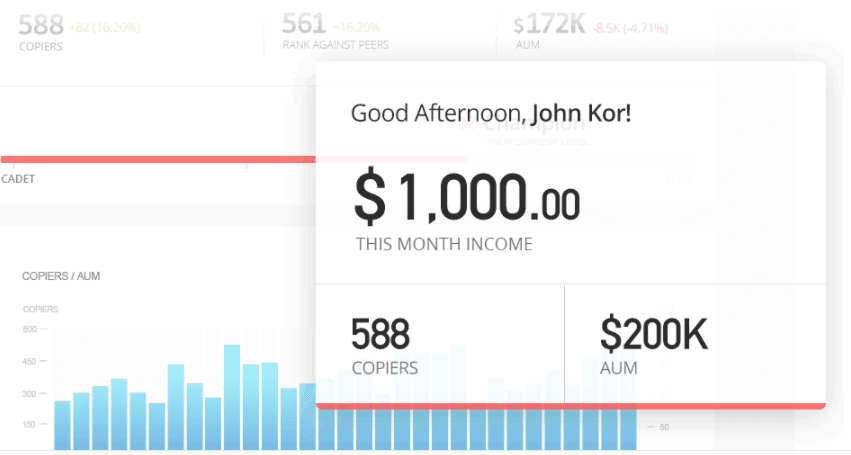
The social news feed, a feature unique to eToro…
eToro also offers a personalized social news feed that lets you follow news on financial instruments and on your favorite traders. You can also interact with other traders in the community: start a discussion, publish posts, tag other traders or financial instruments, and much more.
The broker is also expanding its reach and keeps its social channels active. eToro places great emphasis on knowledge sharing and open discussion, so it lets users share their trading actions and decisions on other social networks such as Twitter and Facebook.
eToro also gives its users a user-friendly, simple and intuitive platform that is perfectly suited to novice traders. It makes it easy to identify the traders who match your trading and investment needs.
Pros | Cons |
|
|
AvaTrade: Trade Multiple Financial Instruments with AvaSocial
 With its AvaSocial app, designed specifically for social trading, AvaTrade makes your social trading experience even more convenient and effective. The app is built on the proven technology of ZuluTrade, one of the industry leaders. AvaSocial is a state-of-the-art social trading platform with high-end trading capabilities, giving you access to a wide range of markets: forex social trading, stock indices, cryptocurrencies (Bitcoin, Ethereum, Litecoin, Ripple) and stocks (with more than 250 different instruments).
AvaTrade Pros | AvaTrade Cons |
|
|
Besides social trading on eToro or AvaTrade, you can also try social trading on XM or social trading on Robinhood. These 2 social trading platforms may also suit you.
Social Trading: Step-by-Step Process
Generally speaking, to start social trading you first need to choose a trading platform and sign up. To walk you through the process in detail, we chose the broker eToro. Fortunately, most brokers work the same way.
How to Start Social Trading on eToro
Step 1: Sign up on eToro
Creating an eToro social trading account is fairly simple. Just follow the process below.
Go to the eToro homepage and click “Join now” or “Log in”.
You will then need to fill in an online form with your:
- username;
- email address;
- password.
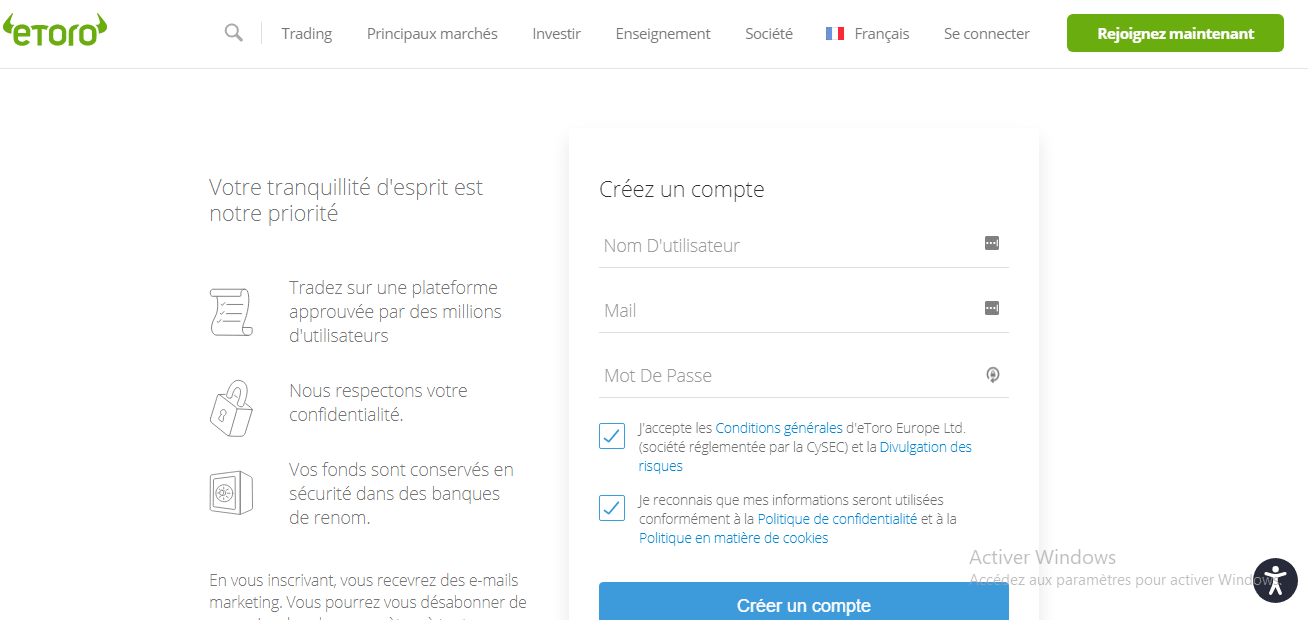
Double-check your details so your information is accurate. For example, if your email is wrong, you won’t receive the confirmation message and your registration won’t be completed.
eToro also offers two faster sign-up options that don’t require entering your details first: simply link your Google or Facebook account.
Before clicking “Create account”, you can (and should) read eToro’s terms and conditions and privacy policy. If you agree to them, tick the relevant boxes. You can then click “Create account” to complete your registration and access your new eToro account.
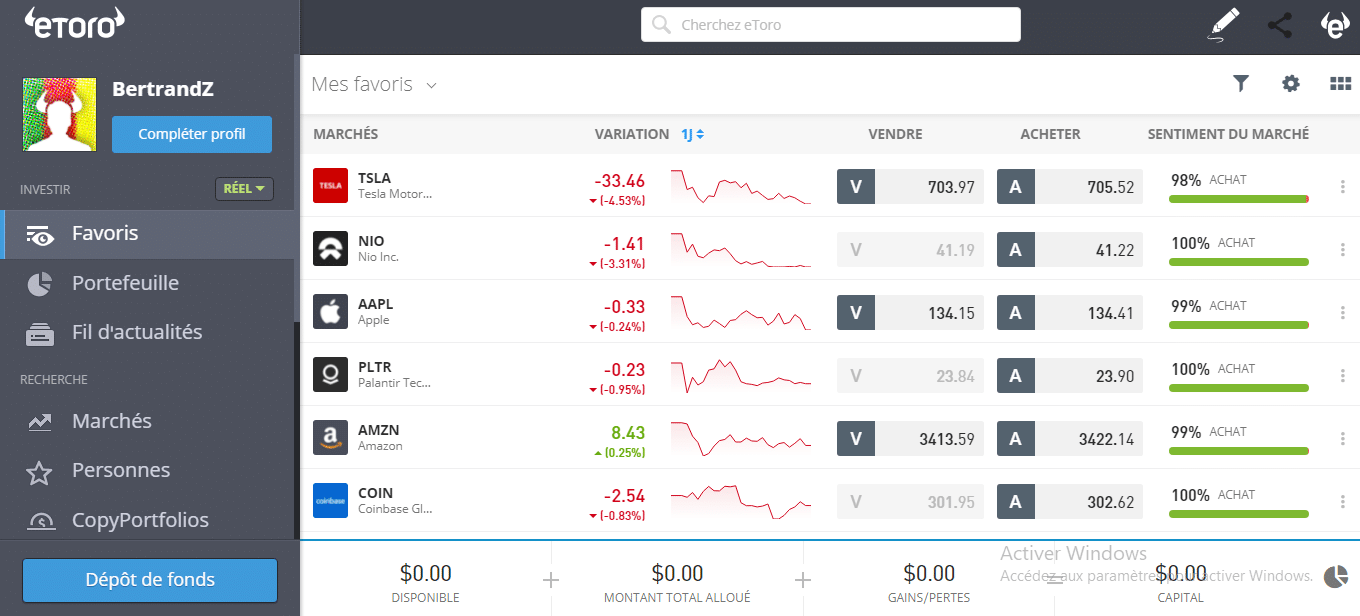
Step 2: Verify your identity
On eToro, you must verify your account to use it fully. As a serious social trading broker, eToro must follow the KYC (Know Your Customer) process, which ensures the information provided is accurate.
To verify your identity, click the “Complete profile” tab in the top-left corner of the homepage.
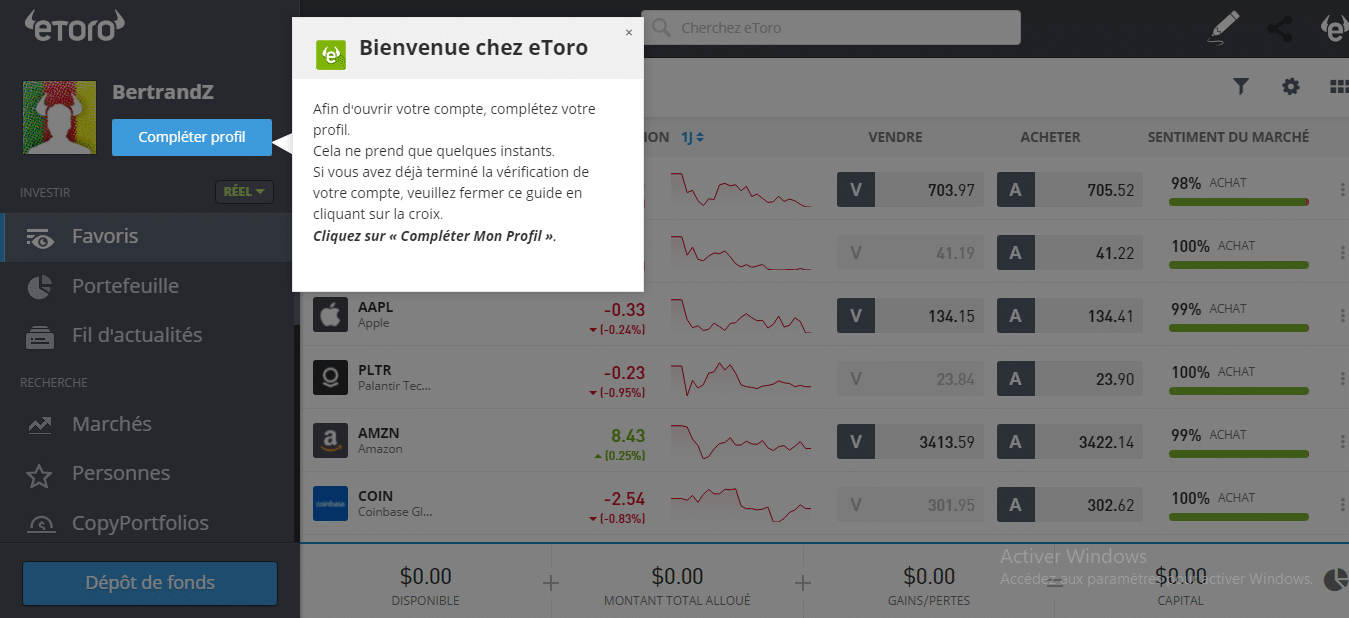
The identity verification tab appears. Click “Continue” and proceed with your verification.
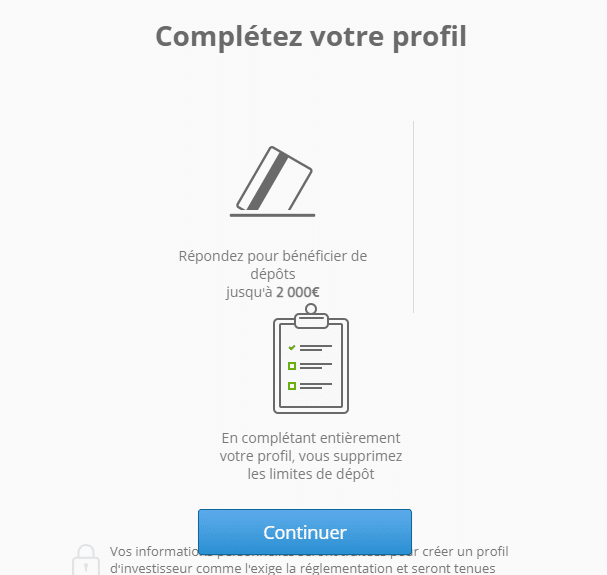
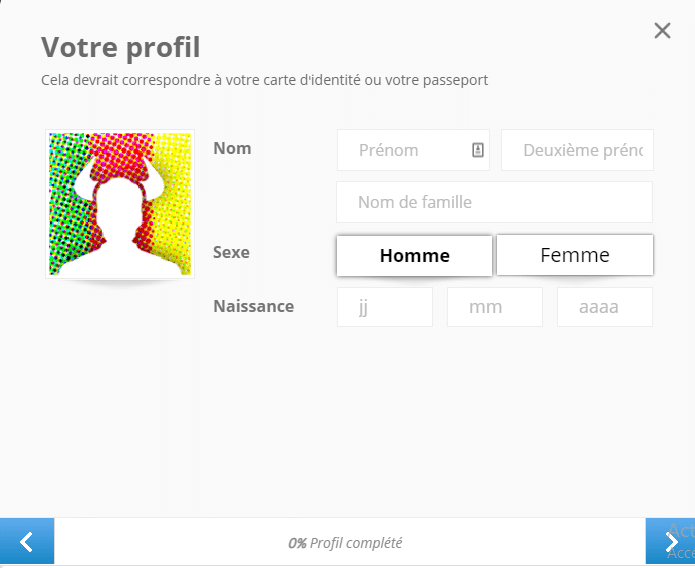
At this stage, you need to enter verifiable personal information:
- first name;
- middle name (if you have one);
- gender;
- date of birth.
To continue, click the right arrow just below.
Next, you will need to provide your:
- address
- trading experience
- experience trading with leverage
- trading knowledge
- self-assessment of your trading knowledge
- planned investments
- expectations from trading
- attitude to risk (stating the amount of your initial investment)
- social status or that of your close relatives
- financial situation and source(s) of income.
- You will also go through eToro’s educational tools and risk-appropriate learning materials.
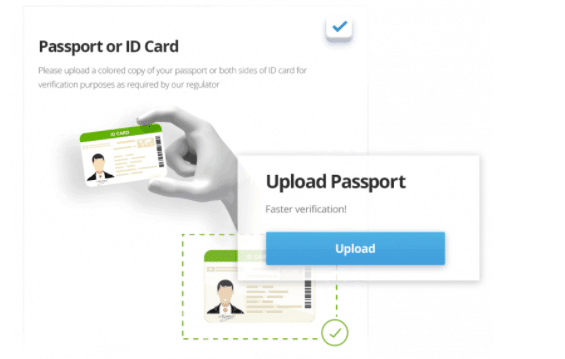
Once you’ve completed your profile, you can verify it by clicking “Continue”. To complete verification, you must provide:
- proof of identity: national ID card, passport or driver’s license
- Proof of address: tax notice, letter from a local authority, electricity bill, water bill or gas bill. Mobile phone bills are not accepted.
Step 3: Fund your account
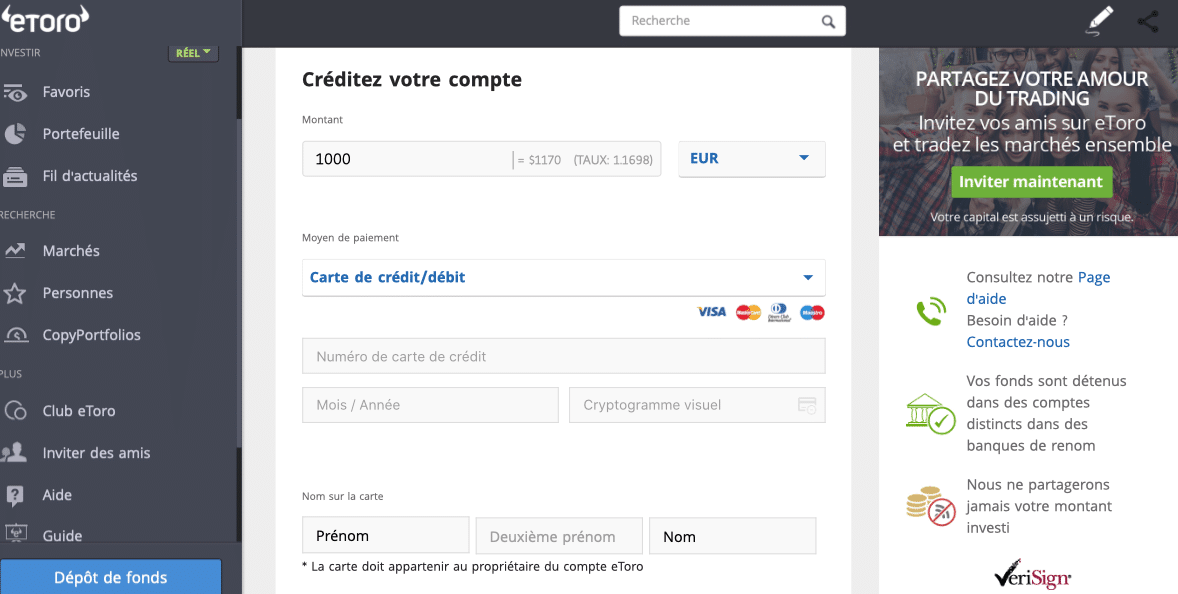
You can now fund your eToro account and make withdrawals securely. Funding your eToro trading account is fairly simple, and the platform offers various payment methods.
Go to “My account” and click “Deposit funds”. Enter the amount, currency, payment method and the related details.
Note that no fee is charged on deposits, but US$5 is deducted for each withdrawal. If you’re a beginner, we recommend starting with $200, which is the minimum deposit accepted by eToro.
Step 4: Set up social trading
With a funded, working account, you can now set it up for trading. Let’s go!
Choose a market to invest in
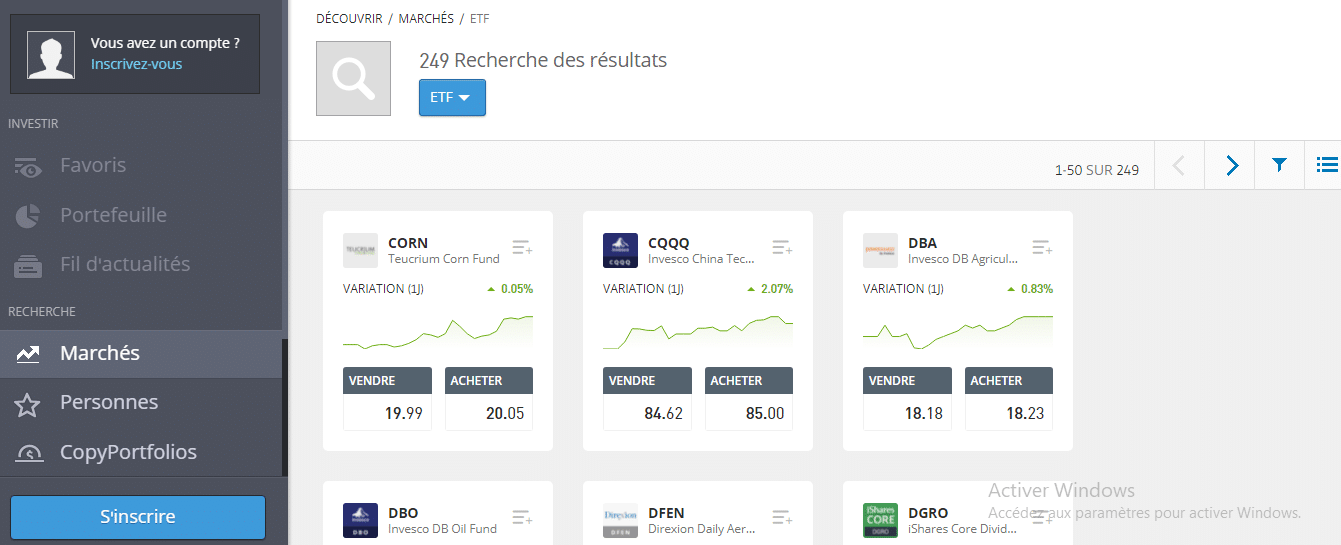
eToro gives you access to a wide range of financial instruments for social trading. To choose a market to invest in, click “Markets” in the left-hand menu.
You can also opt for CFDs (contracts for difference) to take advantage of price movements without owning the underlying asset.
Open a trade
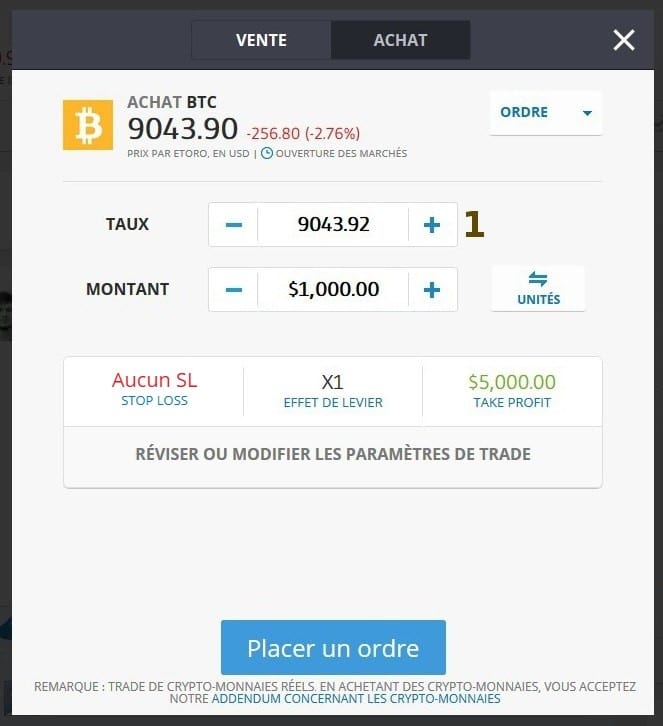
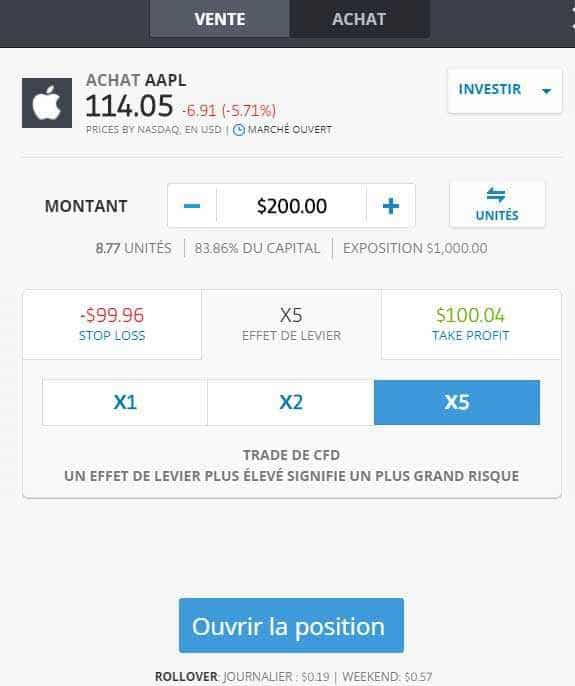
Once you’ve chosen the market you want to invest in, click “Sell” or “Buy”. If, for example, you choose to buy a stock, the corresponding pop-up menu appears. You will need to enter:
- the amount to invest (units)
- the rate (if needed)
- the Take Profit
- the Stop Loss
- the leverage
If everything looks right, you can finalize your trade and click “Place order”.
If there are no open positions or orders, click “Open trade”.
Choose a pro trader and turn on social trading
In general, to choose a pro trader you need to consider a number of criteria detailed below (in the section on how to choose a good trader to copy).
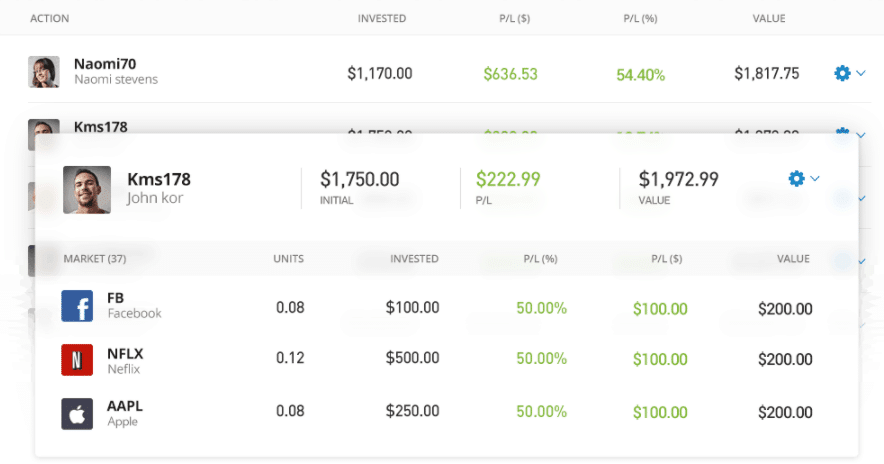
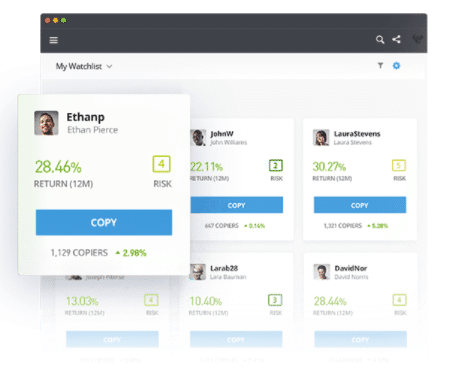
On eToro, finding a trader to copy is quite intuitive, and the broker gives you several ways to find the trader who best matches your trading and investment needs. Just go to “Copy people” to browse the portfolios of many successful traders before copying them. The “Editor’s choice” section highlights Popular Investors who have recently been copied and deserve your attention.
Note: the setup process on the iOS and Android mobile app is almost the same as on desktop, and the eToro app is very easy to use. Once you’ve completed the 3 preliminary steps, simply select your trader and click “Copy”.
Social Trading Pros and Cons: The Verdict!
Copying the best traders in one click to make profits without any effort is a tempting idea. Some people believe in it, while others remain skeptical. Is trusting others to invest in the stock market really a good idea? In this social trading review, we answer that question.
What Are the Advantages of Social Trading?
Social trading has a number of advantages. The most important are:
- Benefit from the experience of thousands of successful traders: even without financial skills, you can invest by copying the positions of experienced traders, and even use them as a basis to set up your automated trading strategy. In effect, you replicate their trading performance.
- Skip the “trading course” stage: learning to trade is a real investment of time and money, and courses don’t guarantee you’ll become a trading expert. With social trading, you can skip this step.
- Easy to get started: all you need to start is your phone. Social trading is the safest way to start trading without skills or experience.
- Build a community of retail investors: social trading sites create investor communities where you can talk with other traders and share knowledge while working with various organizations.
- Access the best traders in one click: with a single click, a wealth of experience is at your fingertips. Inexperienced investors can also interact with skilled traders for one-to-one mentoring.
- Quick access to reliable investor information: social trading sites greatly reduce research time by providing, directly on their platform, detailed information from professional traders all over the world. These platforms also let you interact with experienced traders through a social trading forum.
- Learn by watching and doing: you can analyze the logic and reasoning of the traders you follow. Learning here is more concrete, since you directly put these seasoned traders’ strategies into practice.
What Are the Risks of Social Trading?
Social trading also has its downsides. Obviously, it’s impossible to make money without taking risks. Here are the drawbacks of copy trading:
- False sense of security: naturally, you feel confident when working with the best. When copying successful traders with impressive performance, it’s easy to forget that trading itself is a risky activity where you don’t win every time. This can lead you to invest large amounts without assessing the risk.
- Choosing the wrong traders to copy: you need to be able to choose the trader who best matches your goals, otherwise you multiply the risk of failure. For example, if you’re looking for a long-term investment, avoid copying traders who operate in vulnerable, high-risk markets.
Summary and Verdict!
Advantages of social trading | Disadvantages of social trading |
|
|
Perfectly suited to beginners, social trading is arguably the most reliable and practical trading model. Its main appeal is being able to entrust your investment to a trading expert. This type of trading isn’t new, but it has been revived by new technology. If you’re a beginner, here’s how to avoid the pitfalls of social trading. You should:
- Only invest what you can afford to lose, even if you’re copying the best-performing trader on the platform.
- Choose the trader who best matches your needs. We explain how to choose a good trader to copy below.
Interested in social trading? Let’s look at the concept in more detail!
How Social Trading Works
Social trading works much like a social network. To receive an ordinary trader’s positions in real time, you simply “subscribe” to their channel by clicking “Copy” (depending on the platform). Then, when a copied trader executes an order, the follower executes the same order. This is known as “copy trading” or “mirror trading”.
Investors can also practice social trading while keeping control over their trades, using trading signals or indicators. Trading signals are alerts issued by other traders or by social trading bots about investment opportunities, which you can use to trade the markets.
Platforms generally reward experienced traders who share their strategies with money or status, depending on how many traders follow them.
Social Trading Basics for Beginners
Before getting into social trading, here’s the basic knowledge you absolutely need:
Understanding the products: there is a wide range of financial instruments on the markets (stocks, bonds, turbos, options, futures, and forex or CFDs).
Managing risk and your capital: you need to protect your money in order to grow it. As a beginner, avoid taking too much risk and only stake what you’re prepared to lose.
Choosing the platform and the trader to copy: to get started, pick an effective platform where you can find the best traders to copy. Also choose popular traders who can meet your trading and investment needs.
Key Features of Social Trading
What makes social trading different is that it is built on an environment of exchange and cooperation. Social trading is characterized by:
- Unrestricted information sharing: investors freely exchange large amounts of information about trading opportunities.
- Collaborative trading: it lets you collaborate and work as a group by pooling funds or sharing research work.
Is Social Trading Right for Me?
Social trading isn’t only for beginners. Here are some examples of profiles that could benefit from copying successful traders:
- Traders who trade manually can turn to social trading to reduce risk by diversifying their strategies.
- Experienced traders, even high performers, can benefit by studying the strategies of other successful traders.
Which Financial Markets Can You Use for Social Trading?
Investors have access to a wide range of markets. You can invest in one or several markets at once, depending on your short-, medium- and long-term investment needs. Here are the main financial markets you can invest in:
- The stock market. The best market for long-term investing.
- The ETF (exchange-traded fund) market. Well suited to long-term investing.
- The cryptocurrency market. Suitable for both short-term trading and long-term investing.
- The commodities market. Suited to short-, medium- or long-term trading.
- The forex market. Forex social trading is ideal for very short-term trading.
 Diversifiez votre patrimoineInvestissez dans l’artDes tableaux originaux, pièces uniques signées par l’artiste. Un actif tangible, loin des écrans et des cotations.Voir les tableaux →
How Much Can You Make or Lose with Social Trading?
In practice, it’s hard to pin down likely gains on a social trading site. Statistics do show better profitability on social trading networks. However, most beginner traders lose a lot of money because they jump in too quickly without putting in any effort. Some invest without holding anything back when they follow high-performing traders.
Is Social Trading Regulated?
Social trading is regulated in Europe. The European Securities and Markets Authority (ESMA) asks national regulators such as the FCA to require “financial investment adviser” authorization to operate a social trading platform. Social trading in France is regulated by the AMF, and in the UK by the FCA.
Outside Europe, things are more relaxed. Some authorities don’t recognize social trading, and no additional authorization is required. Generally speaking, global standards are set in Europe. If you want to get started and avoid a social trading scam, it’s best to choose a platform overseen by a regulatory authority.
What to Know Before You Start Social Trading
If you’re a beginner, here are some tips that will be very useful for better social trading:
- Choose a regulated social trading site with a good reputation.
- Practice in demo mode.
- Avoid investing large amounts at first, even if the trader you follow shows excellent performance.
- Diversify your portfolio by copying the trades of several experienced traders.
- Favor long-term investments over quick gains.
How to Choose a Good Trader to Copy: Criteria
The following factors help you identify the right trader to copy.
- Type of trader – It’s useful to know whether the trader you decide to follow works alone, within a company or as part of a hedge fund. You should also know whether they use automated systems to analyze signals or trade manually.
- Level of expertise – How well a professional trader masters their trading strategy determines whether you should trust them. Find out whether they rely entirely on technical indicators and chart analysis or whether they carry out fundamental analysis of the economic calendar. You can place more trust in a trader who combines both approaches, as this offers greater security.
The trader’s experience
To find a good trader to follow, look at their experience. They should have been active in the market for at least 12 months. The more experience they have, the better their analysis. Over a longer period, you can assess their performance across different market phases (range-bound, trendless, bull and bear markets).
Success rate
A good trader has a fairly high success rate. Above 80% means they have excellent risk control. They manage to offset their losses with a diversified portfolio and activity across several markets at once.
Investment horizon
Depending on your patience, you can choose a popular investor with a long-term strategy, or a day trader who prefers small trades during the day. The investment horizon must match your profile.
Consistency and ROI
A popular trader worth following shows consistent results over a long period. For example, it’s better to choose a trader who maintains a 3% monthly return on investment over the long term than one who alternates between good and bad results over the same period.
Risk-taking
Look at the level of risk taken by the trader you decide to follow. It’s important to favor a professional who sets up a safety net to limit risk. As a follower, you can’t trust a trader who takes unlimited risk. Check whether they use stop-losses and how far away they place them. A stop-loss placed too far from the entry point leaves huge risk, while one placed close to the entry point keeps risk under control.
Popularity and communication
Look at how many people follow the popular trader. This tells you how popular they are and how reliable their analysis is. Clearly, if many people copy a trader’s strategies, it means they are getting good results.
How to Become a Trader Others Copy
Generally speaking, here’s how to become a trader others can copy:
- Create an account on a trading platform.
- Develop your trading strategies and publish them.
- Start trading to improve your performance.
- Promote yourself and your strategies on social networks to attract followers faster.
How to Choose a Social Trading Platform
Here’s how to easily find the best social trading site to start safely:
- Choose a platform regulated by a regulatory body such as the AMF in France or the FCA in the UK.
- Opt for an intuitive platform with comprehensive tools (leverage, indicators…) and an excellent balance of responsiveness and stability.
- Favor platforms that offer free social trading over paid access that offers no extra benefit.
- Assess how trustworthy the broker is based on user reviews, social trading forums and reviews from reference websites.
Conclusion
By its very definition, social trading makes trading accessible to anyone who wants to get started. However, it’s important to have some trading basics so you stay in control of your investment. Even if you copy the best-performing trader, keep in mind that trading accidents happen even to experts. Stay rational to protect your investments.