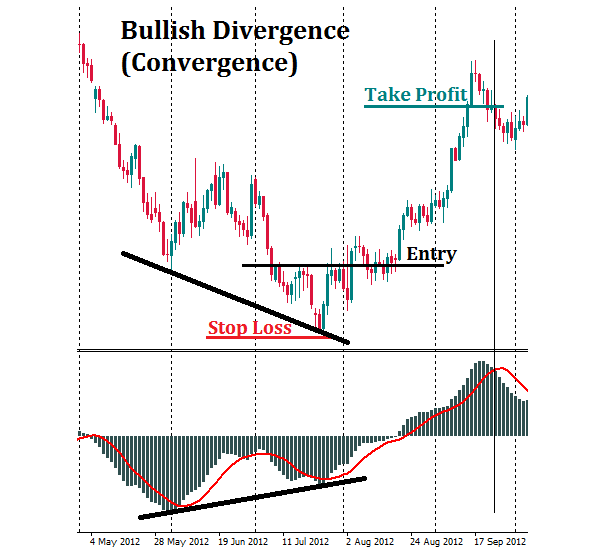
Placing a take profit improves risk management and lets traders keep their exposure to a minimum. It is therefore important to know what a take profit order is and, above all, how to use it when trading.
What Is Take Profit?
Take profit definition: a take profit is a type of order on trading platforms that lets you set the profit level at which the trader can close a position in profit. The take profit can be set in euros or in pips. It is a free order type offered by brokers, used by stock market, forex and cryptocurrency investors.
A take profit lets you lock in your gains. Prices very often move in the direction the trader predicted, but then turn negative because of a moment of inattention. Setting a take profit is therefore essential, whatever your trading style. It is vital for traders who prefer swing trading and day trading, and is often necessary even in scalping.
If this topic interests you, also see “Take Profit Definition” and “Alti Trading Review 2026“.
Take Profit: Best Brokers for Stock Trading
What Is a Stop Loss?
The stop loss is the counterpart of the take profit. Unlike a take profit, a stop loss lets you limit losses. It is very popular with traders, beginners and experienced alike. The trader uses a stop loss (SL) to set the exact amount they are willing to lose on a position. It is an excellent money management tool. There are two main types of stop loss:
- The classic stop loss;
- The trailing stop loss.
What Is a Classic Stop Loss?
A classic stop loss, or hard stop loss, is used to limit losses at a precise point. With this stop loss, the trader sets a fixed loss level regardless of market trends. As with a take profit, the position is closed automatically when the classic stop loss level is reached.
What Is a Trailing Stop Loss?
A trailing stop loss lets the trader maintain a constant loss level that follows price movements. The trailing stop loss moves when the trend is favourable and stays fixed when losses loom. The target loss amount is maintained, but with a moving target.
The trailing stop loss differs from the classic stop loss in that it lets you lock in gains when the position is closed.
Why Use a Stop Loss or Take Profit in Trading?
- Take profit and stop loss give you peace of mind. Traders don’t always spend the whole day in front of their charts. With targets set in advance, the trader can attend to other things while the stop loss or take profit tracks the target.
- Take profit and stop loss ensure a degree of efficiency. Traders can’t always react in time to certain opportunities or dangers. With a stop loss or take profit, they can be confident that the target will be reached either way.
- Take profit and stop loss help control and balance overall risk. The trader knows in real time their risk exposure and the gains they can expect.
Tips for Using Take Profit Effectively
To use a take profit order well, you need to be able to spot market opportunities. We suggest keeping these guidelines in mind when placing a take profit.
- Use reliable data: it is essential to make your calculations as reliable as possible. Don’t place a take profit order if you are not convinced by your data. Stock trading is very sensitive, and even the smallest mistakes can lead to considerable losses.
- Don’t change your order settings: when trading, don’t change your settings unless your new data is reliable enough. Emotions often override reason and push traders into irrational decisions.
- Don’t guess your take profit level
- Use an alert system: this is an effective tip, especially when you are not always in front of your trading platform.
These are the main orders traders use when opening a position. On the stock market, it clearly takes a lot of time to carry out a good analysis. The goal is to make the best trades and set your targets as well as possible before taking a position.
How to See Your Take Profit on a Chart
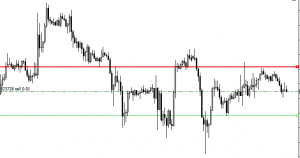
Once you have set your take profit, a coloured line labelled T/P appears on your chart, as shown in this image.
Profit Trading: Why Place a Take Profit?
You need to place these orders when you don’t spend the whole day in front of your chart. They execute automatically according to the instruction attached to them, so you can set the amount you want to make on a position. Note that a take profit is not set at random: it is after several calculations and analyses that you can place it at an optimal level.
However, there are charts and situations in which it is better not to place a take profit.
Disadvantages of a Take Profit
- In strongly trending markets, for example, placing a take profit could mean missing out on a significant opportunity. The take profit could make a position only marginally profitable when it actually represented a big opportunity.
Advantages of a Take Profit
These orders are among the best and most widely used safety measures available.
- By placing a take profit, you protect yourself against market uncertainty. It is very useful in a market with an unclear trend, where it is hard to say whether the trend will continue or reverse.
- A take profit order lets you lock in gains at favourable levels and better protect yourself against the risk of unexpected trend reversals.
How to Place a Take Profit
The position of a take profit on a chart is not chosen at random. Given the risks and sensitivity involved, you need to place your order carefully. Where you place your take profit varies considerably depending on your trading style. Scalpers prefer to take little risk on their positions and set their orders to target 20 to 30 pips. Day traders place them a little further away, and swing traders further still. There are several ways to place this type of order, including:
1. Placing a Take Profit by Estimation
You can use the information and chart analysis on a price curve to determine your take profit. To estimate your take profit well, good chart analysis is always necessary. This analysis lets you accurately determine the price trend, price zones and the ideal entry point. You can also identify support and resistance levels from chart analysis before doing your calculations.
On a trending chart, the take profit can be placed either according to your trading target (30 pips per position) or by reading support and resistance levels. For a long position, you could place a stop loss slightly below resistance and the take profit before the support level, as shown in this image.

2. Placing a Take Profit Using Technical Indicators
Some technical indicators help determine stop loss and take profit levels. A technical indicator is a program offered by the broker that helps assess price behaviour on a market. Several indicators can help you set your take profit.
Ichimoku is a technical indicator designed by a Japanese financial journalist. It gives an overall view of the market and is often used to determine take profit or stop loss levels, highlighting excellent price levels for placing stop loss and take profit orders.
Besides this indicator, there are several others you can use to place orders, such as Fibonacci retracement or the moving average.
What Types of Take Profit Are There?
Stop loss orders vary from one trading strategy to another. Each trader has a particular style, and for each style it is important to adjust the settings accordingly, so there is a wide variety of stop losses. A take profit, on the other hand, can be set at several levels without changing its form: the trader can place a single take profit with different levels without really changing the order type.
The trader can choose a simple take profit or one with intermediate levels. Either way, it is essential to choose the one best suited to your goals.
1. Classic Take Profit
This is placed at a specific level on the chart, set either by reading support and resistance levels or with technical indicators. The moving average is an excellent indicator for this type of take profit. Most traders, especially beginners, use it because it is fairly simple to set up.
Once placed, the position is closed automatically when prices reach that level. The trader can change it if they wish, so a take profit is not final once set.
2. Trailing Take Profit
A trailing take profit is a take profit order placed on the market to maximise gains on an open position. Depending on its settings, it moves as the market moves beyond the initial forecast. If you planned to close a position at 10% above the entry price, with a trailing take profit your position will not be closed when the 10% is reached: gains will keep growing until the market starts moving in the opposite direction.
3. Partial Take Profit
This is a closing order that executes at several levels. This strategy is most successful with experienced traders. Its configuration allows it to generate profits even in an uncertain market, but using it requires more refined analysis. Several indicators can be used to calculate the profit levels, including Fibonacci retracement and Ichimoku.
 Diversifiez votre patrimoineInvestissez dans l’artDes tableaux originaux, pièces uniques signées par l’artiste. Un actif tangible, loin des écrans et des cotations.Voir les tableaux →
How to Determine the Size of a Take Profit
The size of a take profit order depends on how confident the trader is about a position. Some prefer to take their gains gradually, which is the main idea behind the partial take profit. There are therefore:
1. The 50/50 Take Profit Method
This method sets two exit points: the first closes half the position, and the second closes the rest. This method is clearly precise, but it has one flaw: on analysis, the risk/reward ratio is unbalanced. We therefore advise moving the stop loss after the first level has been closed.
2. The 1-2-3 or Triple-Scale Take Profit Method
This method is similar to the 50/50 method, but with three levels. With three lots, positions are closed in three stages: the first at the first lot, the second at the second lot and the last at the top lot. It is wise to move the stop loss after closing the second lot to limit the risk of loss.
3. The 80/20 Take Profit Method
This is a take profit method for aggressive trading and highly volatile markets. It lets the trader secure the first 80% of gains before letting the remaining 20% run until closed.
Profit Trading: Take Profit in Forex
Forex is one of the main markets where it makes sense to trade with take profit orders. It attracts more and more beginners and therefore has a high proportion of traders looking for risk management strategies and tools. The various risk management courses on forex platforms put the use of take profit and stop loss front and centre. Trading with risk management measures is therefore more than necessary to succeed in forex, although some brokers make the task fairly easy for traders.
1. Take Profit on eToro
eToro is the most suitable broker for beginners in our ranking of the best brokers of 2025. As the best choice for getting started in the stock market, eToro has more than one trick up its sleeve to attract clients. Its highly user-friendly trading platform lets traders place certain orders with the greatest of ease. There are two ways to place a take profit order on eToro.
- You can place your take profit by entering how much you would like to make at the end of a trade: after opening a position, the platform gives you tools to place your take profit simply by entering the amount you want to make on the position.
- Place your take profit by entering a percentage: this percentage can be the profit margin you want on your position. Simply enter it in the take profit field of the interface.
2. Take Profit on MT4
MetaTrader has been one of the most comprehensive and popular forex trading platforms for many years. Anyone can use it, and it comes with a very simple user manual. Placing a take profit on MT4 is fairly easy: just open the New Order tab, then fill in the stop and take profit levels you have chosen for the position in the fields provided.
Leverage: 1:500 Spreads: from 0.0 pip Regulation: ASIC, FCA, CIMA, VFSC Minimum Deposit: €200 ★★★★★ 5/5
Trade Now