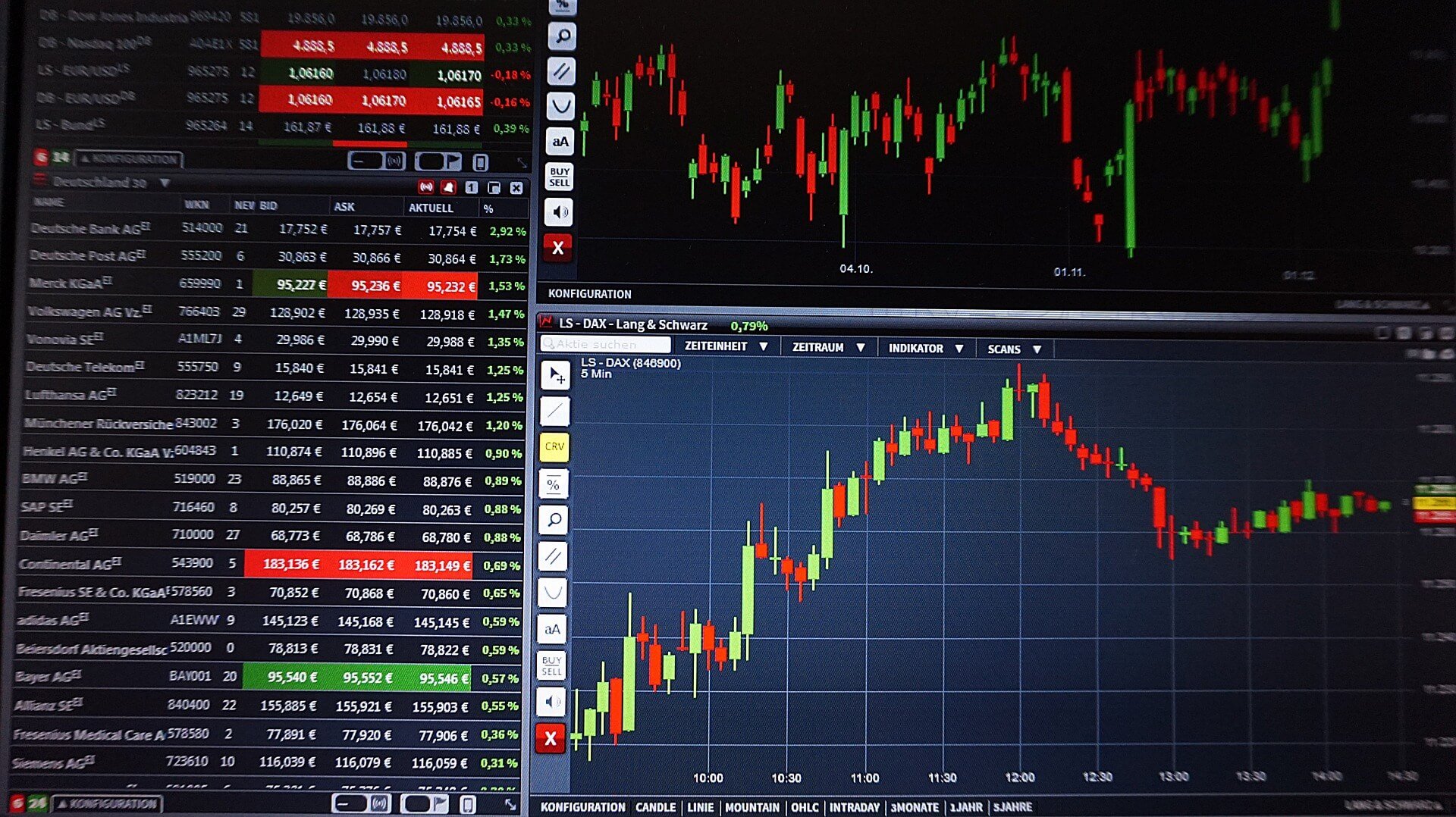
 Trading fees and brokerage costs: Before you start trading, it is important to know how much it will cost so you can calculate your future profitability as accurately as possible. In this article, we tell you everything about trading fees, whether brokerage commissions or spreads, and introduce the cheapest brokers right now.
Broker Fees: The Complete List
- Spreads or commissions.
- Swaps or rollovers.
- Inactivity fees.
- Withdrawal fees.
- Currency conversion fees
A large majority of traders overlook the impact of spreads on their short- or long-term profitability. From one product to another and from one broker to another, brokerage fees vary in type and size. Brokerage fees are commissions that brokers charge for acting as an intermediary between the online investor and the market.
Because of their market experience or the quality of their services, some brokers charge higher prices than others. This widens the range of factors that determine the quality of the broker you trade with, and leads to a distinction between brokers for professional traders and brokers for beginners.
On related topics, our articles “Alti Trading Review 2026” and “Vestle Trading Review 2026” are a good complement to this guide.
Spreads
CFD spreads are fees that brokers charge on every order placed on a trading platform. They are a form of payment the broker takes whether the trade ends in a loss or a profit. The spread is the difference between the buy price (ask) and the sell price (bid) of a financial asset. It varies from one asset to another and from one broker to another, and sometimes depends on market conditions (liquid or volatile market).
Fixed Spreads and Variable Spreads
- Fixed spreads: spreads that do not change regardless of market conditions. With fixed spreads, traders know the cost of their trades in advance, but this creates a major problem: with these spreads, the broker effectively acts as a market maker.
- Variable spreads: spreads that change depending on trading conditions. Here, traders can build a trading plan around the opportunities that arise while having a real-time estimate of the spreads they will pay on their positions.
Factors That Affect Spreads
Although spreads vary from one asset to another and often from one broker to another, certain market conditions can instantly change the spread. These factors include:
- Factors that widen spreads: spreads increase when trading volume falls, usually in the morning when investors are considering their trades, at midday as the market approaches its temporary close, and in the evening just before the close. Volatility can also widen spreads: a volatile market offers many opportunities, which pushes spreads up. The market is very often volatile ahead of economic announcements;
- Factors that narrow spreads: while spreads widen in volatile, low-volume markets, they narrow considerably when trading volume increases.
Swaps and Other Broker Fees
Swaps are special charges applied to traders who hold positions for more than one trading session. They are daily interest amounts that can be received or paid. When you trade a currency pair, you already own the currency you are trading up or down, so you borrow what you don’t have. If your position stays open for more than a day, you pay interest on the currency you borrowed and receive interest on the one you hold.
Inactivity Fees
Brokers charge fees on accounts with a positive balance that remain inactive for a long time. These fees also depend on your broker, so they are not fixed.
Withdrawal Fees
When you invest on the stock market and make profits or losses, you can withdraw your funds. Withdrawal fees vary depending on the amount withdrawn and the withdrawal method.
Currency Conversion Fees
When you open a trading account with a broker, you deposit funds in a currency of your choice. If you need to invest in an asset priced in a currency other than your account currency, you will have to convert the money in your account into that foreign currency.
Comparison of Other Brokerage Fees
Broker Our guide Brokerage Fees Definition: A Simple, Clear Explanation naturally takes this further. | Swaps | Withdrawal fees | Deposit fees | Conversion fees | Inactivity fees |
|---|---|---|---|---|---|
 | Buy: 6.4% Sell: 2.9% | $5 | Free | 2.5% (min. $1) | $5 per month after 1 year of inactivity |
 | Variable | Free | Free | 1.8% | €10 per month after 2 years of inactivity |
 | Variable | Free | Free | Variable | $50 after 3 months and $100 after 12 months of inactivity |
Broker Fees in 2026
Broker fees in 2026 cannot be fixed, especially since they have not been in previous years. The variable nature of spreads and some trading fees confirms that some brokers’ spreads change from year to year. We have therefore observed the pricing of several brokers to build a comparison table of brokerage fees in 2026. In the table below, we compare brokers’ spreads in 2026.
Brokers | Instruments | Spreads |
 | FOREX
INDICES
COMMODITIES
| Forex fees 0.5 PIPS 1.7 PIPS 1.7 PIPS Index fees 0.8 PIPS 1.1 PIPS 1.1 PIPS Commodity fees 0.32 PIPS |
 | FOREX
INDICES
COMMODITIES
| Forex fees 0.9 PIPS 1.5 PIPS 2 PIPS Index fees 1.5 PIPS 1 PIPS 3 PIPS Commodity fees 0.34 PIPS |
 | FOREX
INDICES
COMMODITIES
| Forex fees 3 PIPS 4 PIPS 3 PIPS Index fees 2 PIPS 10 PIPS 6 PIPS Commodity fees 0.45 PIPS |
 | FOREX
INDICES
COMMODITIES
| Forex fees 0.6 PIPS 1 PIPS 1.6 PIPS Index fees 0.8 PIPS 0.8 PIPS 1.5 PIPS Commodity fees 0.25 PIPS |
This table shows prices that differ from one another, a faithful reflection of how variable brokerage fees are. It gives a better picture of how pricing really differs between brokers.
Forex Brokerage Fees
Forex is the market where currencies are traded. In 2026, it is a highly liquid market with extremely large trading volume. It attracts more beginner investors than any other market, because it is relatively easy to master and its parameters suit amateur trading.
BROKER | EURUSD | USDJPY | EURGBP | GBPUSD | USDCHF | AUDUSD | USDCAD | EURCHF |
|---|---|---|---|---|---|---|---|---|
| Try It | 0.1 | 0.2 | 0.3 | 0.1 | 0.3 | 0.2 | 0.2 | 0.2 |
| 0.9 | 1.1 | 1.5 | 1.6 | 1.6 | 1.1 | 2.2 | 2.2 |
 | 0.6 | 1.2 | 0.86 | 0.9 | 0.92 | 0.77 | 1.20 | 2 |
 | 1 | 1.7 | 1.2 | 2 | 1 | 2.2 | 1 | 3.6 |
Just as brokerage fees in general vary from one broker and one trading style to another, Forex spreads also vary by broker and by trading style. To help you choose which instrument to trade, here are some Forex broker fees for getting started in trading in 2026.
CFD Brokerage Fees
In this section, we focus on stocks, indices and commodities. A trading strategy built on keeping brokerage fees under control is essential to trading well. CFDs account for a significant share of daily trading volume on the markets. They are volatile, and a large majority of traders find them worthwhile; in fact, many professional traders prefer trading CFDs.
Broker | Minimum spreads |
|---|---|
 | Indices: 0.8 pips Commodities: 0.25 pips Forex: 0.6 pips |
| Indices: 3 pips Commodities: 2 pips Forex: 0.45 pips |
| Indices: 0.8 pips Commodities: 0.32 pips Forex: 0.5 pips |
| Indices: 1.5 pips Commodities: 0.34 pips Forex: 0.9 pips |
What Are Trading Fees? Brokerage Fees Defined
Trading fees, or brokerage fees, are fees that a financial institution or broker charges for acting as an intermediary on the financial markets, between the client and the stock market. Brokerage fees are therefore the broker’s compensation. Depending on how you invest, they may be the fees charged by banks and traditional brokers: a percentage or flat fee on each trade, plus other charges such as custody fees. With online brokers offering Forex or CFD investing, they can also take the form of spreads and commissions.
Brokerage Fees: The Spread
BROKER | DAX 30 | CAC 40 | DJI 30 | S&P 500 | Nasdaq 100 | Nikkei 225 | Stoxx 50 | FTSE 100 | |
|---|---|---|---|---|---|---|---|---|---|
| 0.8 | 1.1 | 1.1 | 0.3 | 1 | 9 | 1.5 | 1.1 | TRY IT |
| 1.5 | 1 | 3 | 0.25 | 1 | 10 | 1 | 1 | |
| 2 | 10 | 6 | 0.75 | 2.4 | 10 | 3 | 1.5 |
If you choose to speculate online with a broker offering Forex or CFD investing, such as eToro, IG or Trading 212, trading fees are calculated as a spread.
Here, the spread is the difference between the buy (ask) price and the sell (bid) price of a security or financial asset. Spreads can differ greatly from one broker to another and also vary by asset class, so it is best to check them on your broker’s platform or website before opening an account.
Some regulated, reliable brokers such as Vantage currently offer attractive variable spreads that let you speculate on many financial assets at a lower cost.
Factors That Affect the Spread in 2026
 As you will see in our comparison of online brokers’ spreads, most spreads offered today are variable. This means they change over time depending on various factors.
The main factors that influence the spread, and therefore the cost of your trades, are:
- Market liquidity: the volume of an asset traded each day. Some markets, such as Forex, are more liquid than others, such as the stock market. The higher the trading volume in a market, the lower the spread, and vice versa for less popular markets with low trading volumes.
- Market volatility: besides liquidity, market volatility also affects an asset’s spread. Volatility generally tends to rise around major economic announcements or when the market moves quickly. High volatility means more trading opportunities, which tends to widen the spread. To measure a market’s volatility, you can use specific technical indicators such as the ATR.
To better understand what makes an asset’s spread widen or narrow, keep in mind that an asset with low trading volume is considered illiquid (it cannot easily be converted into cash). The broker will therefore ask for higher compensation to process the trade and will widen the spread.
Spreads therefore often widen during hours when trading volumes fall. This can be seen in the evening, during the lunch break, or just before major announcements, when investors wait before taking positions. To get the best spreads, it helps to know the best times to trade.
When market volatility rises, it also means investors can seize more trading opportunities. Naturally, this widens the spread through the well-known mechanism of supply and demand. Low volatility, which means low demand for trading, narrows the spread to attract investors to the market.
How Is the Spread Calculated?
To calculate the spread, simply subtract the bid price from the ask price. Take an asset that can be sold at €90.50 and bought at €90.55. The spread is calculated as follows:
90.55 – 90.50 = 0.05
The spread is therefore 0.05.
Trading Fees in 2026: The Swap
Swap fees apply when an investor keeps a position open between two sessions. They are also called overnight fees. They correspond to interest that is debited or credited at the end of the session and vary by market.
More precisely, the swap is the amount debited or credited each day for each open position. It reflects the interest rate differential between central banks, based on market rates and the spreads of the assets concerned. Brokers credit or debit the swap once a day, calculated according to various risk management criteria and market conditions.
Swap fees are calculated as follows: pip value for the trade size x swap rate in pips x number of nights. The result is the swap amount debited or credited.
Deposit and Withdrawal Fees
Deposit or withdrawal fees: although fees on deposits to a trading account are increasingly rare and most brokers now offer commission-free deposits, financial intermediaries generally charge for withdrawals. These withdrawal fees can vary depending on several criteria, such as the broker, the withdrawal method or the amount. You can therefore get some withdrawals free of charge by choosing certain methods.
Conversion Fees
When you invest in assets priced in a currency other than your base currency, your broker may charge currency conversion fees. Most often, these are calculated as a percentage of the total trade amount and can vary from one broker to another.
For example, if you trade with a broker that only offers assets in US dollars and you deposit funds in another currency such as the euro, you will be charged conversion fees.
Suppose the currency pair is trading at 1.1581: for every euro deposited, your account will be credited with $1.1581. If your broker charges conversion fees of 250 points on this pair, or 2.5%, simply subtract that number of points from the conversion of each euro: 1.1581 – 0.0250 = 1.1330. Each euro deposited will therefore credit your account with $1.1330.
Account Maintenance Fees
Account maintenance fees used to be common when opening investment accounts such as securities accounts or PEAs with brokers or banks. Today, however, they are only rarely charged. Your broker may nevertheless offer a managed account that requires certain fees.
Managed accounts are run by investment professionals who take positions on the market on your behalf.
Account Opening and Closing Fees
In addition to the fees mentioned above, some brokers charge fees for opening or closing trading accounts. Opening fees are also very rare, but a few brokers still charge closing fees, notably depending on the number of assets or the capital held in the account.
 Diversifiez votre patrimoineInvestissez dans l’artDes tableaux originaux, pièces uniques signées par l’artiste. Un actif tangible, loin des écrans et des cotations.Voir les tableaux →
Brokerage Fees on Stocks: Custody Fees
In addition to the brokerage fees we have just discussed and any inactivity fees, banks and traditional stockbrokers may charge other trading fees, such as custody fees.
Custody fees are charged annually by these brokers and financial intermediaries to clients holding a securities account or a PEA (Plan d’Épargne en Actions, a French equity savings plan). They are the intermediaries’ main source of income for holding securities and providing related services such as corporate actions and dividend payments.
Custody fees generally vary with the number of lines held in the portfolio and its overall value.
However, since most securities are now held in dematerialized form, custody fees are controversial and no longer really justified. That is why only a handful of brokers still charge them today.
Also note that custody fees on securities that generate taxable income are deductible from that income.
Inactivity Fees
Finally, some brokers charge inactivity fees on a monthly basis. As the name suggests, they only apply when the trading account is not being used.
However, some brokers have chosen to apply these fees only when no trades are made on the account for a long period, typically one or two years, and only if the account balance is positive.
The CRD, or Deferred Settlement Fee
Another fee that may apply to trading through a securities account or PEA is the deferred settlement fee (CRD). It applies when the investor chooses to invest through the deferred settlement service (SRD).
In this case, your broker advances the money needed to buy the securities, or borrows the securities for a short sale under the SRD. This naturally incurs additional costs. However, when a security is bought and sold on the same day, these day trading fees do not include a CRD.
Our Tips to Reduce Your Trading Fees in 2026
As we have just seen, brokerage fees and spreads are unavoidable, because they are how brokers are paid for providing market access. No broker or financial intermediary will work for free, which is perfectly understandable.
But while these transaction costs are unavoidable and there is no such thing as completely free trading, there are several techniques to keep the cost of your investments as low as possible with a little method.
First, remember that brokerage fees vary mainly from one broker to another and, for variable spreads, with the time of day. Here is how to reduce your trading costs:
- First, of course, compare the brokerage fees and spreads of different brokers. But above all, check the fees and commissions charged on the assets you are most interested in.
- If you trade short term or day trade, you can also reduce your costs by favoring highly liquid assets or by trading during the best hours of the day.
- Closing your positions before the end of the session will also help you avoid certain additional fees, such as swap fees, which we cover in more detail below, unless the swap is positive.
- If you prefer a long-term trading strategy, it is better to avoid a margin trading account, which usually incurs significant swaps every night. That way, you only pay brokerage fees or the spread, and possibly a commission. This type of account often applies to investing in stocks and ETFs.
How Do Brokers Set Their Spreads and Brokerage Fees?
As we have just seen, brokerage fees and spreads are charged by brokers and financial intermediaries as their compensation. They are set according to predefined criteria such as the type of instrument offered, market liquidity or volatility, margin or the custody of securities, but also according to the broker’s marketing policy.
The Different Fees Charged by Online Brokers
When trading online with a broker offering CFDs or Forex, there are different types of costs to consider when assessing your future profitability. These include standard fees, in the form of a fixed or variable spread, and additional fees such as swaps or commissions.
Fixed Spreads and Variable Spreads
- First, the spread is the main cost you need to consider if you trade Forex or CFDs. There are in fact two types of spreads: fixed and variable.
- A fixed spread stays the same over time, so investors know exactly and in advance how much a trade will cost them, but it has some drawbacks. When the market is too volatile, assets with fixed spreads are no longer available, which prevents you from taking advantage of certain opportunities.
- Conversely, a variable spread constantly moves around a certain value. This continuous variation makes it harder to know trading costs in advance, but has the advantage of letting you trade whenever you want, whatever the market conditions.
- One important point, however: although you can choose between a broker offering fixed spreads and one offering variable spreads, fixed spreads are becoming increasingly rare. The online trading market favors variable spreads because of regulation.
- To offer a fixed spread, the broker or intermediary actually has to be a “market maker”, which means it must be able to set prices itself. With variable spreads, prices are set by external providers such as large banks. More and more financial regulators advise retail investors against trading through a market maker.
Fees by Market
Online trading fees can also vary depending on the type of market, since regulation, liquidity and volatility differ from one market to another.
Forex Fees
- On the foreign exchange (Forex) market, for example, fees are generally lower than on other markets and are often kept to the bare minimum. Most often, currency trading is only subject to spreads, the difference between the buy and sell price of a currency pair.
- Here, the spread is shown by the fourth decimal place of each currency pair’s quote (except for the yen) and is expressed in pips. Again, the Forex spread can be fixed or variable and varies more or less widely depending on the broker and the currency pair traded.
- Of course, the total cost of a Forex trade also depends on the number of units you want to trade and the leverage you use. But the spread is only charged when you open your position. Your position will therefore always open with a negative balance on the Forex market, equal to the amount of the spread.
CFD Fees
- When investing in CFDs, contracts that let you speculate on various types of assets such as indices, currencies or commodities, the spread also makes up most of the costs the trader bears.
- Here too, the number of units bought and the leverage applied determine the cost of the trade.
- Also note that most of the time, stock CFDs are not charged through the spread but through transaction fees on purchase or sale, calculated as a percentage of the position’s value, with a fixed minimum amount.
- This percentage may also vary depending on the trader’s country of residence.
Watch out! Here too, when positions stay open from one session to the next, your broker may charge additional fees, known as “rollover”.
For CFDs on indices, stocks and commodities, buying these assets means you are in a sense borrowing money from your broker. On top of the standard commission charged on trades, you will therefore have to pay interest. But when you sell an asset, the loan works the other way, so your broker pays you the interest. Of course, the broker will still take its commission.
CFDs on futures are a special case: the rollover is not paid daily but only at the end of the contract. For currency CFDs, the rollover depends on the interest rate differential between the central banks of the two currencies in the pair traded. When this differential is positive, you receive the rollover, and you pay it when it is negative.
Fees on Stocks
Fees on stock investing depend mainly on the broker you choose.
The main transaction cost you will pay when investing in stocks is brokerage fees. These apply to every sale and every purchase, so they are paid twice.
Here we distinguish fixed transaction or brokerage fees, which do not change whatever the trade and its size and are attractive for large trades, from variable fees. Variable brokerage or transaction fees generally depend on the following:
- The minimum number of trades: the more trades you make each month, the more likely you are to get preferential rates.
- The order amount: larger orders also help reduce brokerage fees.
So to find out the trading fees at Fortuneo, PostFinance, Swissquote or Revolut, check the conditions, rates and fee amounts for each trade size and volume.
In addition to brokerage fees, you will of course have to pay other ancillary fees, which are not systematic, such as custody fees.
Comparing the Trading Costs of All Stockbrokers
Choosing a stockbroker or broker to start trading necessarily involves comparing several important criteria, including trading fees. These fees can vary more or less widely from one offer to another and affect your profitability over the short or long term. You should therefore take them into account both when setting up your strategy and when choosing your intermediary.
But before you even start comparing these fees, make sure you understand them, as there are many types of trading fees that work differently. They also vary depending on the market or products you invest in, and the fees on a trading platform can also vary depending on the type of account you choose.
As you can see, stockbrokers do not all charge the same fees, but the features and tools each broker offers also differ. The price of your trades should therefore not be the only factor in your comparisons.
For standard brokerage fees, you can find online simulators that give you a rough idea of the future cost of your trades. More generally, you also need to define your investor profile to find the cheapest trading fees for your needs.
In summary, here are the factors that affect the fees on your investments:
- How you trade: PEA/securities account or CFD/Forex
- Markets and instruments: stocks, indices, commodities, currencies, etc.
- Order size
- Account type
- The broker
Consider the Services and Tools Offered, Not Just the Fees
As we have just seen, it would be risky to consider only trading fees when choosing your broker. The cheapest broker will not necessarily be the best suited to your needs and may have shortcomings in its tools and features.
Other things to check before choosing an intermediary include:
- Regulation: choosing a regulated broker is a guarantee of security for your capital. Always favor an intermediary recognized by a European or international regulator.
- Markets and assets: the range of markets and assets available varies from one broker to another. Make sure the instruments and asset classes you are interested in are available and that the fees on those markets are competitive.
- The trading platform: the quality, ease of use and tools (especially analysis tools) of your broker’s trading platform are also important when choosing a broker. These platforms are usually free, but note that some brokers also offer paid solutions.
- Additional tools: in addition to the tools built into the trading platform, brokers may offer extra services such as training, a free demo account, fundamental analysis tools, trading signals, personalized or dedicated account management, or price alerts by SMS.
By making a thorough comparison of the trading offers available, without looking only at the cost of your trades, you will give yourself every chance of maximizing the profitability of your trading.
Brokerage Fees vs Speculative Trading Fees
As we saw earlier, the type of fee charged depends on how you invest, and we mainly distinguish brokerage fees from online trading fees.
While traditional stock investing through a securities account or PEA requires you to pay brokerage fees on every trade, Forex or CFD trading fees have the advantage of offering an all-inclusive service. When you buy a share from a traditional broker, you pay trading fees on both the purchase and the sale, and sometimes other fees such as:
- A subscription to a market data feed
- Account maintenance fees
- Custody fees
With CFDs, as we will see below, trading fees are often limited to the spread, meaning the difference between the buy and sell price. This greatly simplifies the calculation for investors, who know immediately how much their trade will cost. The spread is often much more advantageous than brokerage fees.
Brokerage Fees
Let’s now look more closely at brokerage fees, which traditional brokers and other financial intermediaries charge on every trade, both on purchase and sale. They can take different forms:
- Flat brokerage fees: a fixed amount per trade
- Variable brokerage fees: a percentage of the trade amount
- Mixed brokerage fees: a combination of a fixed amount and a percentage of the trade amount
However, reading and understanding these fees can be complicated, because banks and brokers generally offer several different fee schedules, and prices can vary with the size and frequency of trades. You therefore need to find the best plan for the type of investor you are.
Also note that brokerage fees on buying and selling shares listed on foreign exchanges are often higher than those on French or European shares. Watch out: your broker may also charge inactivity fees, sometimes significant ones, if you make no trades for a month.
Most of the time, the best way to find attractive brokerage fees is to choose a stock trading offer from an online bank. Online banks’ trading fees are often lower than those of traditional high-street banks.
How to Calculate Brokerage Fees in 2026
Now that you know what brokerage fees are, let’s see how to calculate them depending on the type of fee your broker charges.
Calculating Proportional Brokerage Fees
Proportional brokerage fees work as a percentage but may also include a minimum order fee.
For example, with a broker charging 0.5% per line and a minimum order fee of €10, buying 500 shares at €13.10 each amounts to 500*13.1, or €6,550. The brokerage fee will therefore be 0.5% of that amount, or €32.75, since this is higher than the €10 minimum order fee.
Calculating Fixed Brokerage Fees
Fixed brokerage fees are of course much simpler to calculate, since they are a fixed amount based on the size of your order. For example, with a broker charging €15 per order above €5,000, the same trade we looked at above will cost €15 in brokerage fees.
Calculating Mixed Brokerage Fees
The mixed model is one of the most common ways brokers calculate brokerage fees, so it is also important to understand. The formula applied depends on the size of your order.
Most of the time, fixed fees apply below a certain amount, and above that amount the broker charges a percentage.
Using our example, with a broker that charges a fixed €15 per trade below €5,000 and a proportional fee above €5,000, the proportional calculation applies, since the order exceeds the threshold. The brokerage fee for buying the 500 shares will therefore be €32.75.
Tax Treatment of Brokerage Fees
Since brokerage fees are a cost on your stock market trades, you may wonder whether they affect your taxes. In fact, these fees are not taken into account at all when calculating tax on your stock market profits.
When you declare your investment income, whether capital gains from selling securities or dividends received, you cannot deduct the fees incurred in your trading activity from these amounts.
Want advice on finding a broker with low trading fees? Leave us a comment!
Feel free to share your views on the trading fees of different brokers by leaving a comment!